When buyers compare digital night vision monoculars, they often focus on sensor size, refresh rate, IR support, video recording, WiFi transmission, and weight.
These specifications are important, but there is another feature that strongly affects real-world usability:
1x magnification.
For digital night vision monoculars, 1x magnification can provide a more natural viewing experience, especially when the device is used in handheld or helmet-mounted configurations.
This article explains why 1x magnification matters and how buyers should evaluate it when choosing a digital night vision monocular.
What Does 1x Magnification Mean?
1x magnification means the image appears close to its natural size.
In simple terms, the device does not heavily zoom in on the scene. The user can observe the environment with a viewing experience that feels closer to normal vision.
This is different from devices with strong optical magnification, which make distant objects appear larger but reduce the field of view and make close-range movement less natural.
For digital night vision, 1x magnification is especially useful when users need general observation, movement awareness, and helmet-mounted usability.
Why 1x Magnification Feels More Natural
A night vision device is not always used like a spotting scope.
Many users do not only want to look at one distant object. They may need to scan an area, walk, observe surroundings, or switch between device-assisted viewing and normal vision.
In these situations, 1x magnification can feel more natural because the image scale is closer to what the eye expects.
This helps improve:
- 观看舒适度
- Spatial awareness
- Movement confidence
- Helmet-mounted usability
- Long-term observation experience
For users who need a practical digital night vision monocular, natural viewing can be more important than strong zoom.
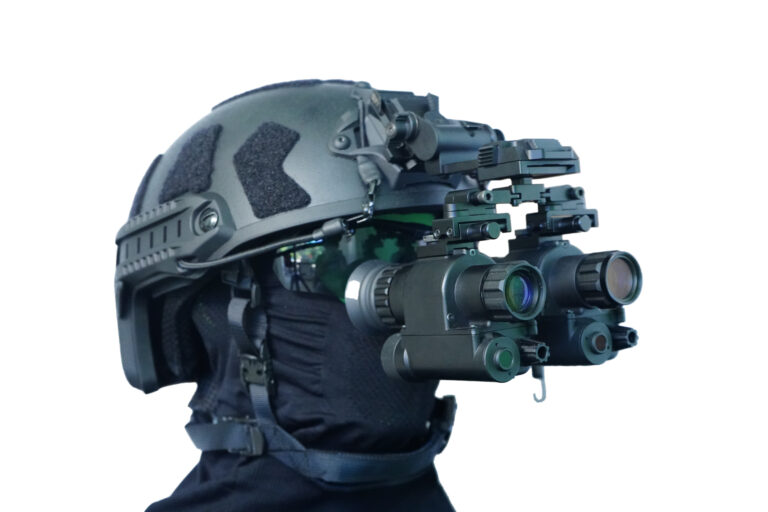
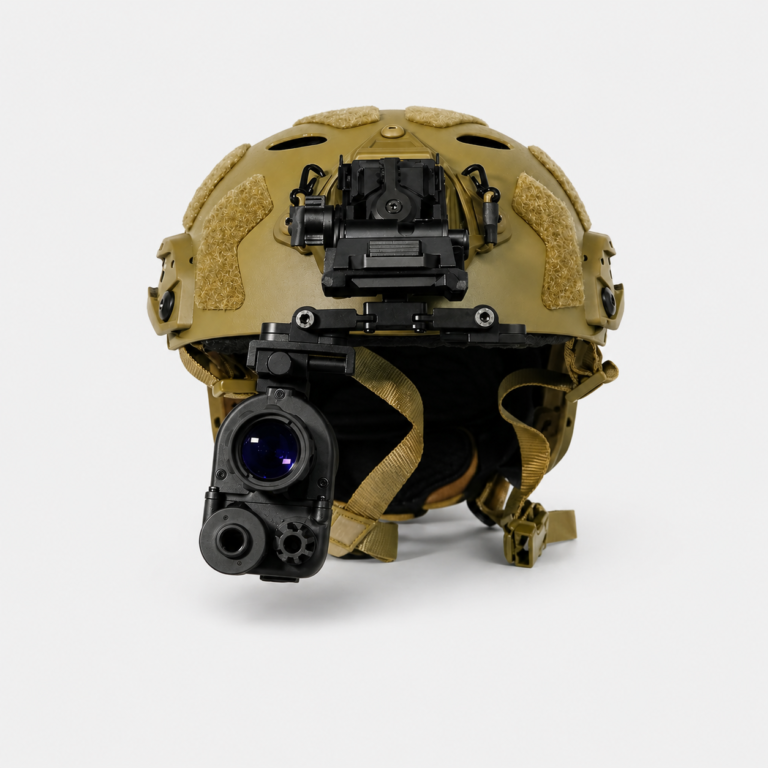
Helmet-mounted night vision requires careful attention to viewing comfort.
When a device is mounted in front of the user’s eye, strong magnification can make movement feel less comfortable. The image may feel too zoomed in, and the user may lose awareness of the surrounding environment.
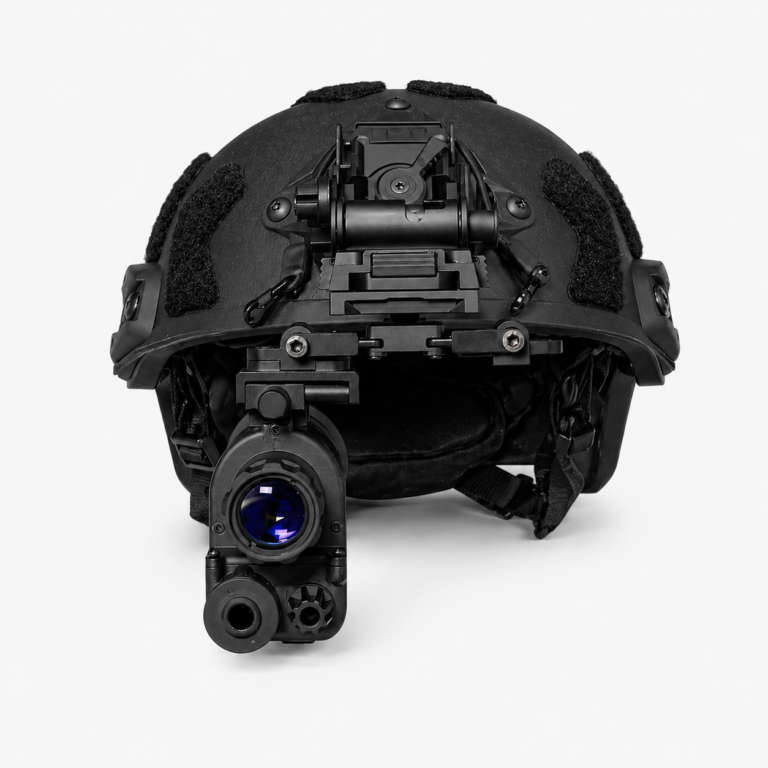
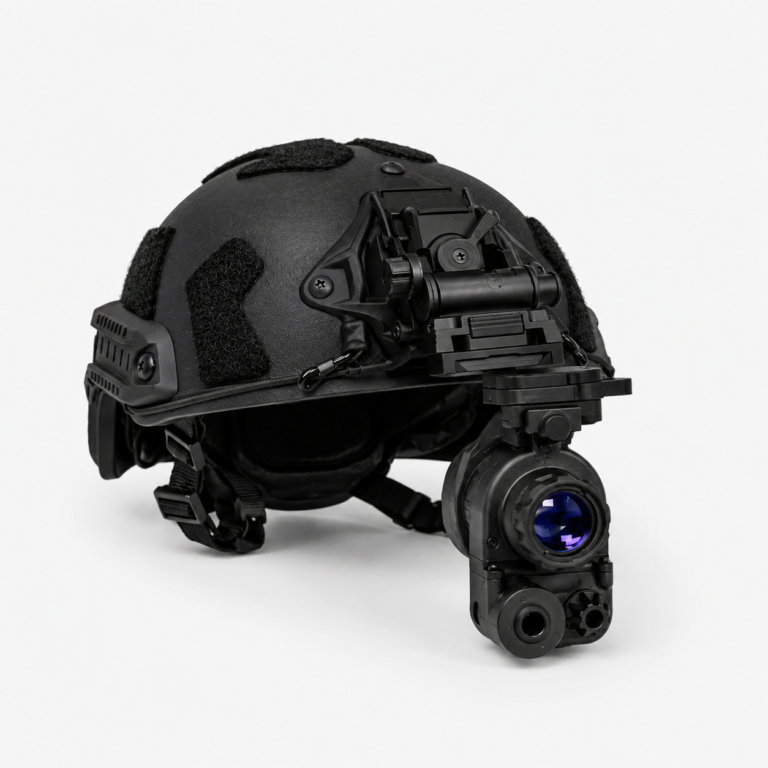
A 1x digital night vision monocular can be more suitable for helmet-mounted use because it supports a more natural viewing scale.
This can help when users need to:
- Scan the environment
- Move while observing
- Keep better awareness of nearby surroundings
- Use the device for longer observation sessions
For helmet-mounted digital night vision, image quality is important, but viewing comfort is also critical.
1x Magnification vs Digital Zoom
Some buyers may confuse 1x magnification with a lack of zoom capability.
These are not the same.
A device can provide 1x base magnification while also supporting digital zoom options.
The 1x view gives users a natural starting point. Digital zoom can then be used when closer inspection is needed.
For example, a digital night vision monocular may support:
- 1x normal viewing
- 2x digital zoom
- 4x digital zoom
This gives users more flexibility.
The key point is that 1x should be the foundation for practical observation, while digital zoom can be used as an additional function.
Why Strong Magnification Is Not Always Better
Higher magnification may sound attractive, but it is not always better for night vision use.
Strong magnification can reduce situational awareness and make the device harder to use during movement.
Potential problems include:
- Narrower viewing area
- More noticeable hand movement
- Less comfortable helmet-mounted use
- Reduced ability to scan nearby areas
- More difficult close-range observation
For certain long-distance observation tasks, magnification can be useful. But for a digital night vision monocular designed for flexible use, 1x magnification often provides better overall usability.
Field of View and Real-World Use
Field of view is closely related to magnification.
A lower magnification design usually helps users maintain a wider and more usable viewing area.
This matters because real-world observation is not only about seeing one object. Users often need to understand the whole environment.
A practical digital night vision monocular should help users observe:
- Nearby surroundings
- Movement in the scene
- Background structures
- 地面细节
- General direction and orientation
A wider, more natural view can make the device easier to use in real conditions.
1x Magnification and Low-Light Testing
When evaluating low-light performance, 1x magnification can also make testing more practical.
A natural viewing scale helps buyers judge whether the device provides useful image clarity and real-world usability.
During sample testing, buyers should check:
- Image clarity at 1x
- 观看舒适度
- 运动的流畅度
- 详细信息可见性
- IR on/off performance
- 录音质量
- WiFi transmission display quality
If the 1x image is clear, stable, and comfortable, the device is more likely to perform well in practical applications.
Why B2B Buyers Should Check Base Magnification
For B2B buyers, dealers, and OEM/ODM partners, base magnification should be clearly understood before ordering.
Customers may ask whether the device is suitable for handheld use, helmet-mounted use, or binocular configuration.
If the product uses strong base magnification, it may be less suitable for some wearable configurations.
买方应确认:
- Base magnification
- Digital zoom levels
- Field of view
- Helmet-mounted usability
- 观看舒适度
- 运动的流畅度
- Customer use scenario
Clear magnification information helps reduce misunderstanding and improves customer confidence.
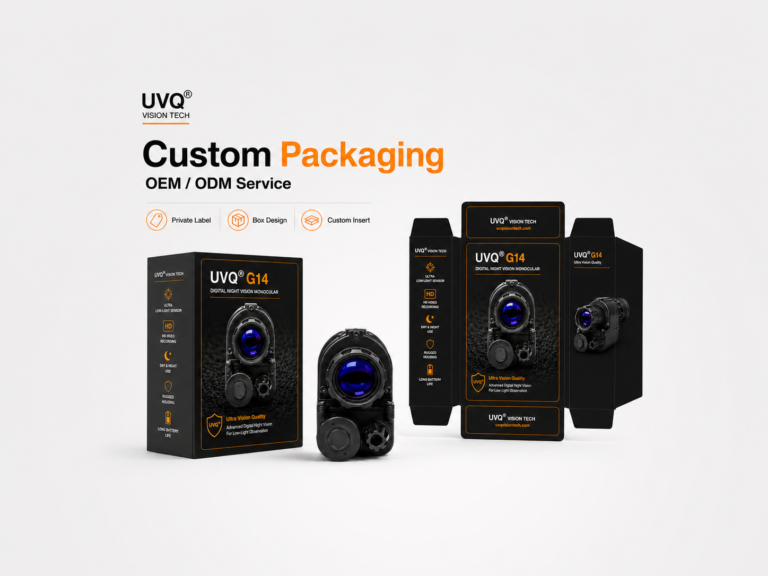
UVQ G14 1x Digital Night Vision Platform
该 UVQ G14 数字夜视单筒望远镜 is designed with practical 1x viewing in mind.
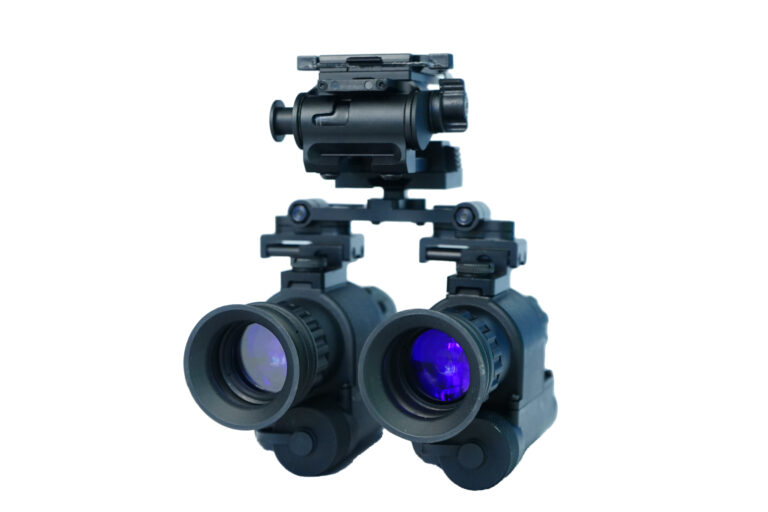
It supports 1x base magnification, digital zoom options, a 1-inch BSI CMOS sensor, 50/100Hz imaging, Android Wi-Fi 实时传输, video recording, manual IR illumination, lightweight body, and helmet-mounted configuration options.
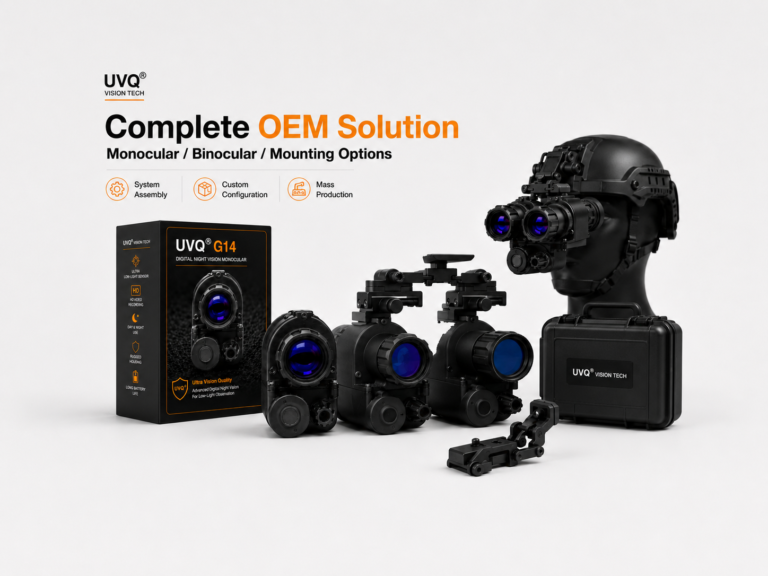
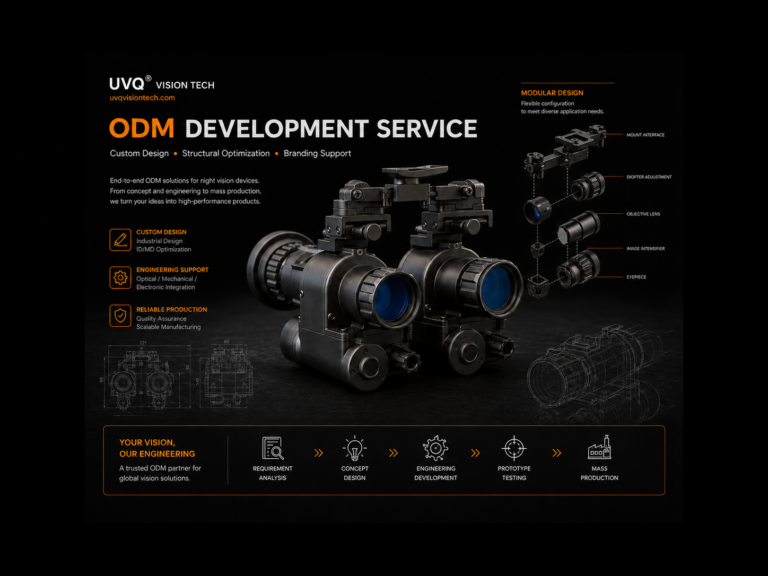
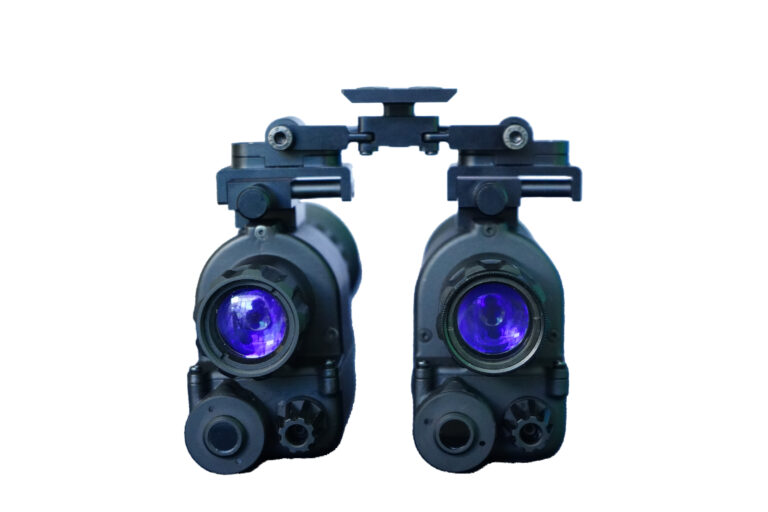
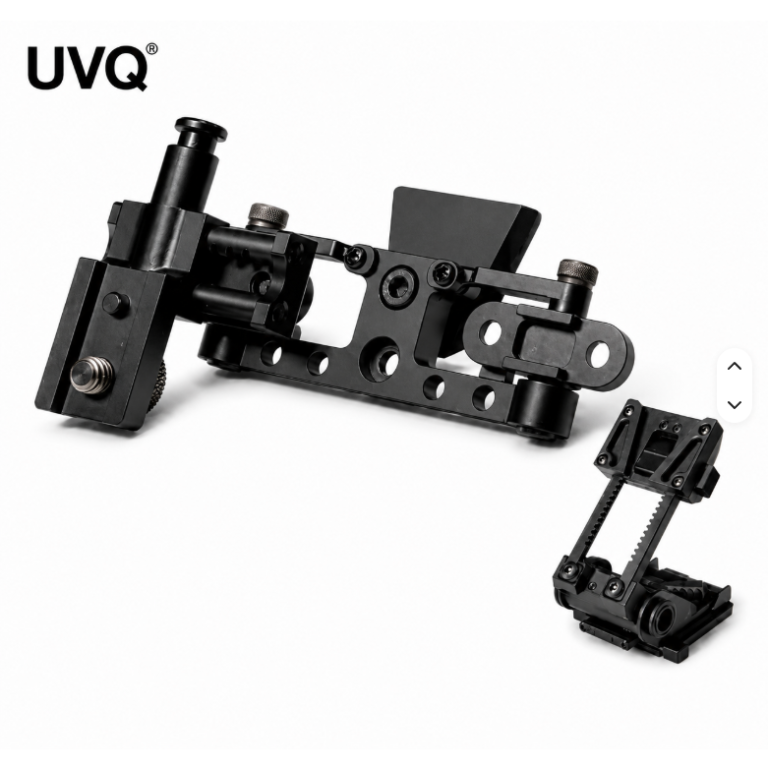
For dealers, distributors, and OEM/ODM buyers, the UVQ G14 provides a flexible platform for handheld use, rail-mounted setup, helmet-mounted configuration, and binocular bridge setup.
The 1x viewing foundation helps make the device more practical for real-world low-light observation and product demonstration.
结语
1x magnification is an important feature in digital night vision monoculars.
It helps provide a more natural viewing experience, supports helmet-mounted use, improves comfort during movement, and gives users a practical foundation for low-light observation.
Buyers should not only compare sensor size, refresh rate, recording function, or WiFi transmission. They should also check how the device feels at its base viewing mode.
For digital night vision monoculars, strong real-world usability often begins with a clear, comfortable, and practical 1x view.
Magnification is only one variable in low-light work, and it interacts with sensor and display behaviour. The underlying reason is covered in 为什么传感器尺寸在数字夜视设备中如此重要, and what 100Hz means in digital night vision explains how refresh rate changes what you actually see. For a practical comparison method, see how to evaluate low-light performance. The reference configuration in this article is the UVQ G14 数字夜视单筒望远镜.

 English
  Chinese
 Spanish