The UVQ night vision product line for 2026 covers the G14 digital monocular, the G31 integrated digital binocular and the T20 fusion monocular, plus the upcoming T30 binocular fusion platform. The G14 binocular configuration (G14B) is not a separate model: it is the binocular (dual-eye) form of the G14 platform.
Which UVQ night vision model should you choose? The short answer is:
- Choose the G14 if you want a lightweight and flexible digital night vision monocular.
- Choose the G14 binocular configuration (G14B) if you prefer a two-eye setup based on the G14 platform.
- Choose the G31 if you need an integrated digital binocular with a balanced power system and longer operating capability.
- Choose the T20 if you require low-light, infrared and thermal fusion imaging in one monocular system.
This guide explains the differences so buyers, dealers and system integrators can identify the most appropriate configuration.
Why Does UVQ Offer Different Night Vision Models?
Night vision buyers do not all have the same requirements. A compact handheld monocular may be suitable for one user, while another buyer may prioritize binocular viewing, helmet-mounted balance, extended operation or thermal fusion.
The UVQ night vision product line is therefore divided by practical configuration rather than by appearance alone. The main differences include:
- Monocular or binocular viewing
- Digital low-light imaging or thermal fusion
- Modular or integrated construction
- Front-mounted or balanced power architecture
- Recording and connectivity requirements
- Expected operating duration
- Individual use or professional project deployment
Understanding these differences is more useful than selecting a product only by resolution, magnification or exterior design.
UVQ G14: Lightweight Digital Night Vision Monocular
Product page: UVQ G14 数字夜视单目镜
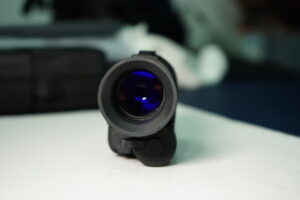
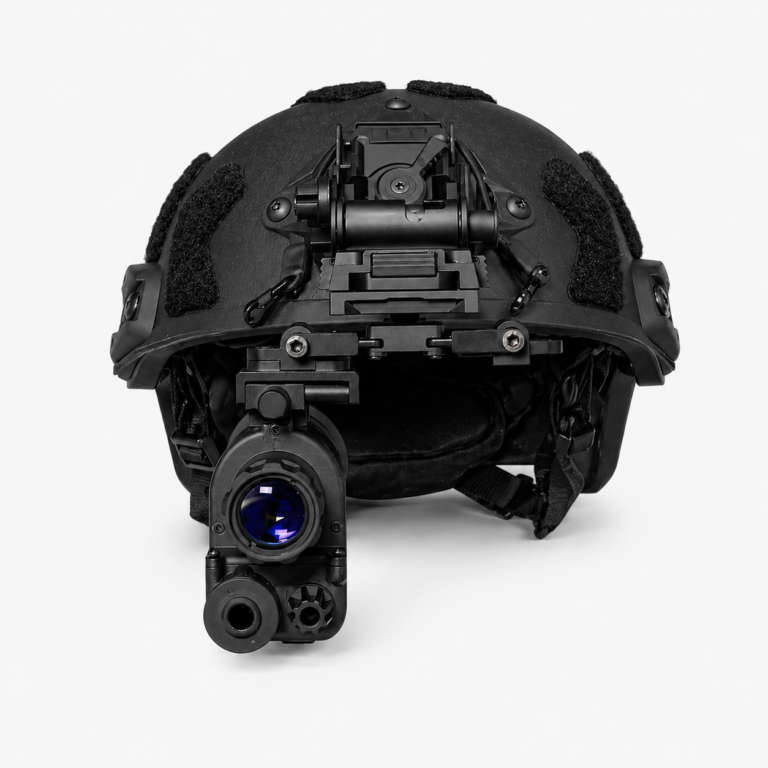
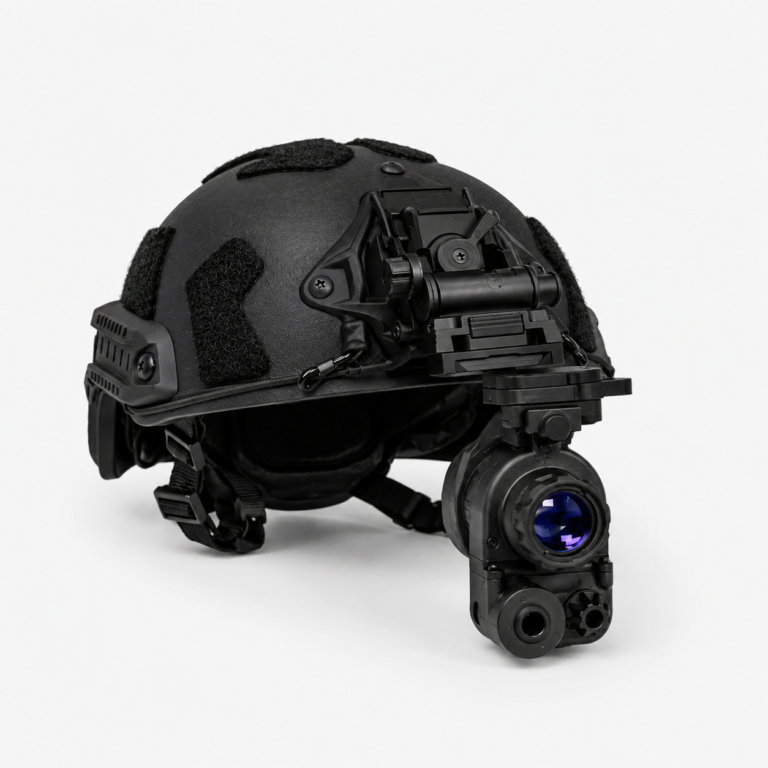
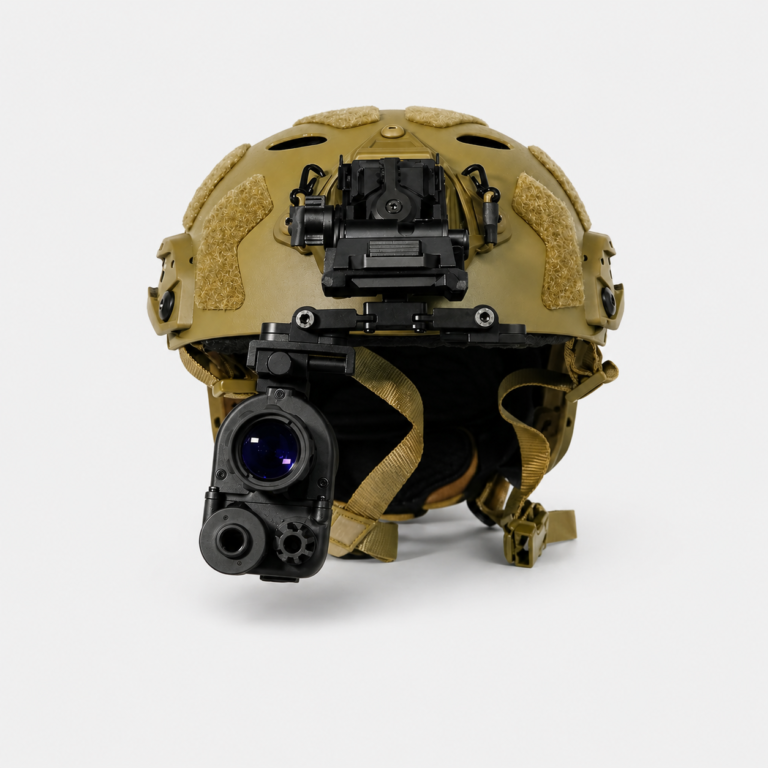
The UVQ G14 is the most compact and flexible model in the current product line. It is a digital night vision monocular designed for 弱光观测, helmet-mounted use, image recording and system expansion.
Its imaging system uses a 1-inch BSI CMOS sensor with 18 μm pixels and a 100 Hz refresh rate. The optical system provides 1× viewing with optional 1×, 2× and 4× digital magnification.
The G14 also supports:
- Android Wi-Fi real-time image transmission
- Built-in 32 GB storage
- Video recording and image capture
- Manual infrared illumination
- Automatic gain control
- UVC video output
- IP67 protection
- Magnesium-aluminum alloy construction
The main unit weighs 246 g without the battery and approximately 295 g with the battery installed. This makes the G14 suitable for buyers who want to start with a single monocular and expand the configuration later.
The G14 is particularly relevant for users who prioritize portability, recording, mobile connectivity and flexible mounting over binocular viewing.
UVQ G14 Binocular Configuration (G14B): Built on the G14 Platform
Product page: UVQ G14 binocular configuration (G14B) Binocular Digital Night Vision Setup
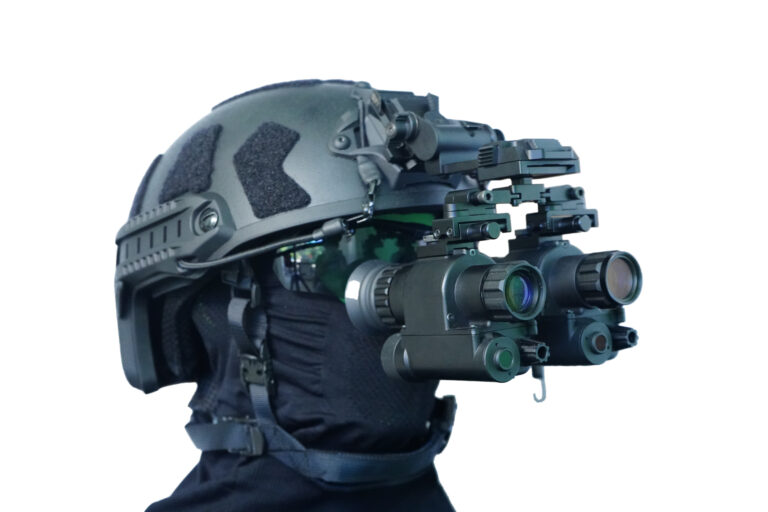
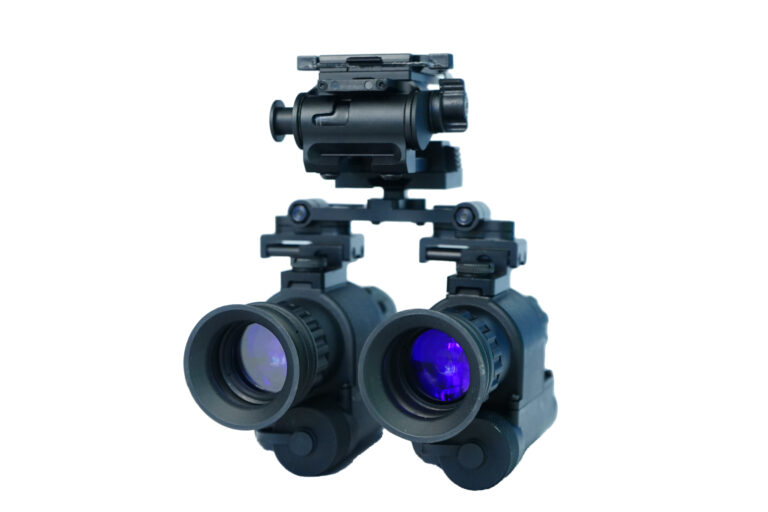
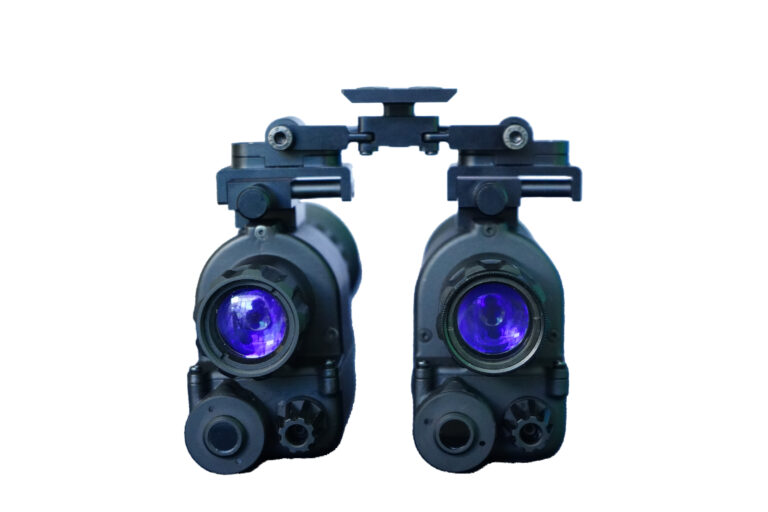
The UVQ G14 binocular configuration (G14B) extends the G14 platform into a binocular system. It is intended for buyers who want two-eye viewing while retaining the imaging, recording and connectivity functions of the G14.
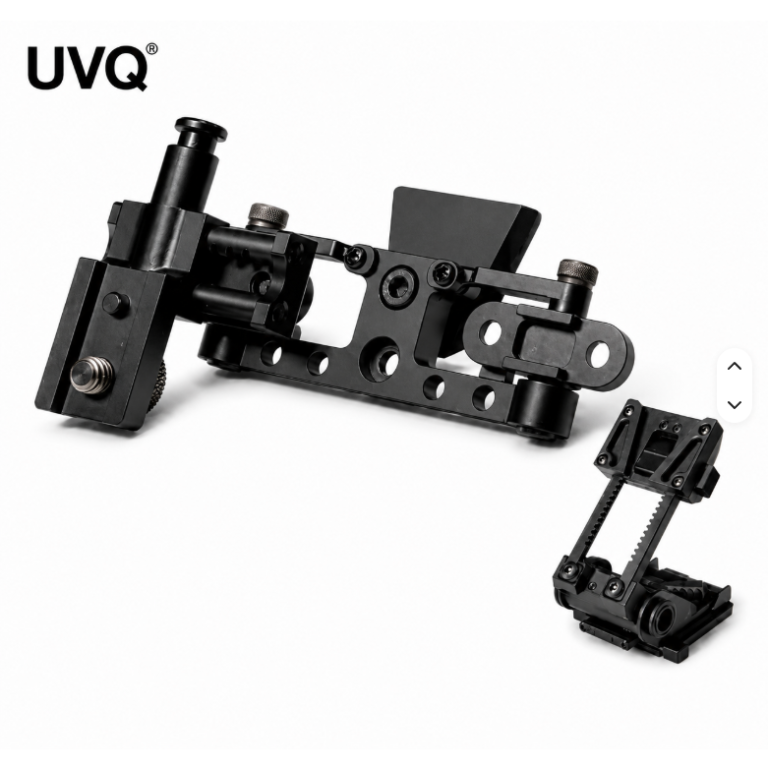
A proper binocular configuration involves more than simply placing two monoculars next to each other. The mounting structure must also support interpupillary distance adjustment, alignment, stability and practical front-to-rear weight management.
The complete G14 binocular configuration (G14B) with its rail weighs approximately 769 g. Compared with the single G14, it provides binocular viewing but also introduces additional weight and setup requirements.
The G14 binocular configuration (G14B) is a suitable choice for users who:
- Prefer binocular observation
- Want the functions of the G14 in a two-eye configuration
- Need a modular system that can be separated or reconfigured
- Accept additional weight in exchange for binocular viewing
- Already understand helmet mounting and balance requirements
For buyers deciding between the G14 and G14 binocular configuration (G14B), the key question is not simply whether two optical channels are better than one. The decision should also consider total system weight, mounting structure, balance and expected operating time.
UVQ G31: Integrated Digital Night Vision Binocular
G31 — planned for release in October 2026. Contact us for G31 availability and pricing.
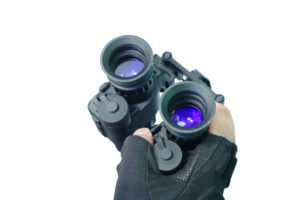
The UVQ G31 is an integrated digital night vision binocular designed around a different structure from the modular G14 binocular configuration (G14B).
Instead of building a binocular setup from two separate monocular units, the G31 uses a dedicated binocular body and a front-to-rear balanced power architecture. Its confirmed total weight is 606 g.
The G31 uses four replaceable 18650 batteries. Locating the battery supply toward the rear helps distribute weight across the complete head-mounted system rather than concentrating all of it at the front.
This design offers several practical advantages:
- Integrated binocular construction
- Front-to-rear weight distribution
- Four replaceable 18650 batteries
- Extended operating capability
- Convenient battery replacement
- Reduced dependence on a permanently sealed internal battery
- A complete system designed specifically for binocular use
The G31 is intended for buyers who want an integrated digital binocular and place greater importance on balance, operating duration and a dedicated binocular structure.
Production and initial testing of the UVQ G31 have been completed, with sales scheduled to begin in October 2026.
UVQ T20: Fusion Imaging in a Monocular System
T20 — planned for release in October 2026. Contact us for T20 availability and pricing.
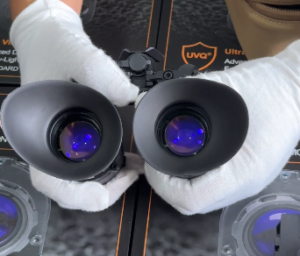
The UVQ T20 is different from the other three models because it combines multiple imaging approaches within one monocular platform.
It provides four operating modes:
- Low-light imaging
- Infrared imaging
- Thermal fusion
- Outline enhancement
The T20 uses a remote power architecture with the power supply positioned away from the front-mounted imaging unit. This reduces concentrated front weight and supports a more balanced helmet-mounted configuration.
Its operating design supports more than 70 hours of runtime, making it suitable for applications in which extended operation and multiple imaging modes are more important than compact size or entry-level cost.
The T20 is most appropriate for buyers who need:
- More than standard digital low-light observation
- Thermal information combined with visible scene detail
- Multiple viewing modes for changing environments
- Extended operating time
- A balanced remote-power configuration
- A higher-level professional observation system
The T20 should not be viewed as a direct replacement for the G14, G14 binocular configuration (G14B) or G31. It belongs to a different product category because thermal fusion changes both its capabilities and its positioning.
How Do the UVQ Night Vision Models Compare?
| Model | Product Type | Main Imaging Approach | Structural Advantage | Best Suited For |
|---|---|---|---|---|
| UVQ G14 | Digital monocular | Digital low-light imaging | Lightweight and modular | Buyers wanting portability, recording and flexible expansion |
| UVQ G14 binocular configuration (G14B) | Digital binocular | Dual digital low-light imaging | Modular binocular configuration | Buyers wanting two-eye viewing based on the G14 platform |
| UVQ G31 | Integrated digital binocular | Digital low-light imaging | Balanced body and four replaceable 18650 batteries | Buyers prioritizing binocular integration, balance and runtime |
| UVQ T20 | Fusion monocular | Low-light, infrared and thermal fusion | Multiple imaging modes and remote power | Professional buyers needing fusion imaging and extended operation |
| UVQ T30 (upcoming) | Binocular fusion platform | Upcoming – details to be announced | Upcoming – details to be announced | Upcoming – details to be announced |
The correct model depends on the buyer’s real operating requirements. A more complex system is not automatically the better choice if its additional functions are not needed.
How Should You Choose a UVQ Night Vision Model?
Choose by Monocular or Binocular Viewing
A monocular is generally lighter, simpler to carry and easier to configure. The G14 is the most flexible option for buyers who want to begin with a single device.
A binocular provides two-eye viewing but requires more attention to total weight, interpupillary distance, mounting stability and balance. Buyers can choose between the modular G14 binocular configuration (G14B) and the integrated G31.
Choose by Digital or Fusion Imaging
The G14, G14 binocular configuration (G14B) and G31 are digital night vision systems focused on low-light imaging.
The T20 adds thermal fusion and outline enhancement. It is better suited to buyers who need multiple sources of visual information rather than low-light imaging alone.
Choose by Modularity
The G14 platform is the more modular option. A buyer can start with one monocular and later add mounting components or build a binocular configuration.
The G31 is designed as a complete binocular system. It is more appropriate for buyers who already know that an integrated binocular is their preferred format.
Choose by Power and Runtime
Replaceable batteries can be useful when equipment must remain operational away from a fixed charging location.
The G31 uses four replaceable 18650 batteries, while the T20 uses a remote power architecture designed for extended operation. Buyers should consider not only the advertised runtime but also battery availability, replacement convenience and weight distribution.
Choose by Recording and Connectivity
The G14 platform supports onboard recording, image capture, Android Wi-Fi image transmission, 32 GB storage and UVC output.
These functions are particularly useful when the buyer needs to document observations, review footage, demonstrate product performance or share through-device images.
Which Model Is Better for Dealers and Distributors?
Dealers should avoid presenting every configuration as an interchangeable product. A clearer sales structure is:
- G14 as the lightweight and flexible digital monocular
- G14 binocular configuration (G14B) as the modular digital binocular
- G31 as the integrated and balanced digital binocular
- T20 as the higher-level fusion imaging monocular
- T30 as the upcoming binocular fusion platform (not yet available)
This structure helps customers understand why each product exists and reduces confusion caused by specification-only comparisons.
Before placing a bulk order, dealers should confirm:
- The customer’s main application
- Monocular or binocular preference
- Helmet-mounted or handheld use
- Recording and Wi-Fi requirements
- Expected operating duration
- Battery availability in the target market
- Need for thermal fusion
- Required mounts, rails, cases and accessories
- After-sales and training requirements
UVQ can support dealers, distributors and project buyers with configuration guidance, product materials, real test footage and order-specific package planning.
Final Recommendation
There is no single best model for every buyer in the UVQ night vision product line.
The G14 is the most suitable starting point for lightweight digital night vision and flexible expansion. The G14 binocular configuration (G14B) adds binocular viewing while retaining the modular G14 platform. The G31 provides an integrated binocular structure with front-to-rear balance and four replaceable 18650 batteries. The T20 serves buyers who require low-light, infrared and thermal fusion imaging with extended operating capability.
The best decision should be based on the viewing format, imaging method, mounting structure, runtime, connectivity and actual operating environment—not simply on which model has the longest specification list.
常见问题解答
Which UVQ night vision model is the lightest?
The UVQ G14 is the lightest model in the current product line. The main unit weighs 246 g without the battery and approximately 295 g with the battery installed.
What is the difference between the G14 binocular configuration (G14B) and G31?
The G14 binocular configuration (G14B) is a modular two-eye setup based on the G14 platform. The G31 is an integrated digital binocular with a dedicated body, front-to-rear weight distribution and four replaceable 18650 batteries.
Does the G31 use replaceable batteries?
Yes. The UVQ G31 uses four replaceable 18650 batteries, supporting convenient replacement and extended operation.
Which UVQ model supports thermal fusion?
The UVQ T20 supports low-light imaging, infrared imaging, thermal fusion and outline enhancement.
Can the G14 be expanded into a binocular configuration?
Yes. The G14 platform can be expanded into the G14 binocular configuration (G14B) using the appropriate rail and mounting components.
Which model should a first-time buyer choose?
For most buyers who want a compact digital night vision device with recording, connectivity and future expansion options, the G14 is the most practical starting point. Buyers who specifically need binocular viewing or thermal fusion should consider the G14 binocular configuration (G14B), G31 or T20 according to their application.
 English
  Chinese
  Spanish