Introduction
When choosing digital night vision equipment, many users compare helmet mounted night vision systems with handheld night vision devices. Each configuration provides different advantages depending on the application.
Should you use a handheld night vision monocular, or choose a helmet mounted night vision setup?
Both configurations provide low-light observation capability, but they are designed for different usage scenarios.
A handheld system offers flexibility and portability, while a helmet mounted configuration provides hands-free operation and better comfort during extended observation.
Understanding the difference helps users choose the right digital night vision solution.
What Is Handheld Night Vision?
A handheld night vision device is designed for direct operation by holding the device with one hand.
This configuration is simple, lightweight, and easy to carry.
Users can quickly take the device out, observe the environment, capture images, and record videos when needed.
Advantages of Handheld Night Vision
1. Easy to carry
Handheld night vision devices are usually compact and lightweight, making them convenient for outdoor activities and daily observation.
2. Flexible usage
Users can quickly change viewing directions and share the device between different people.
3. Simple setup
A handheld configuration requires fewer accessories and is easier for first-time users.
Typical Applications
Handheld digital night vision is suitable for:
- Outdoor observation
- Wildlife watching
- Low-light inspection
- Equipment checking
- General night viewing
What Is Helmet Mounted Night Vision?
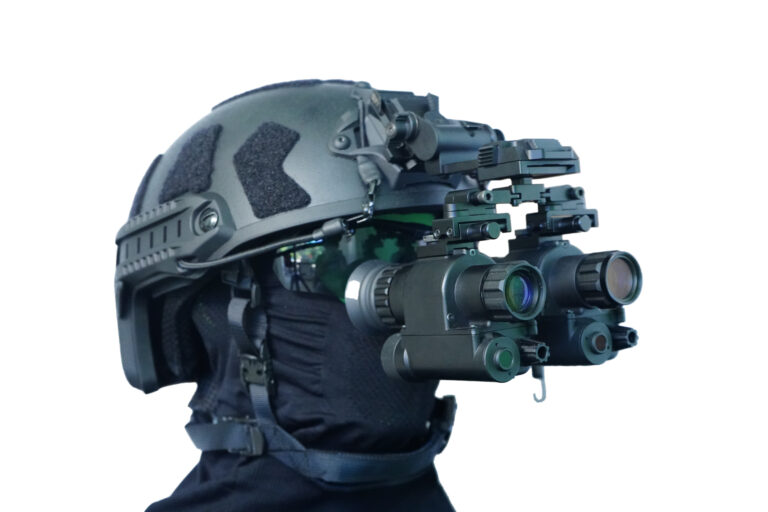
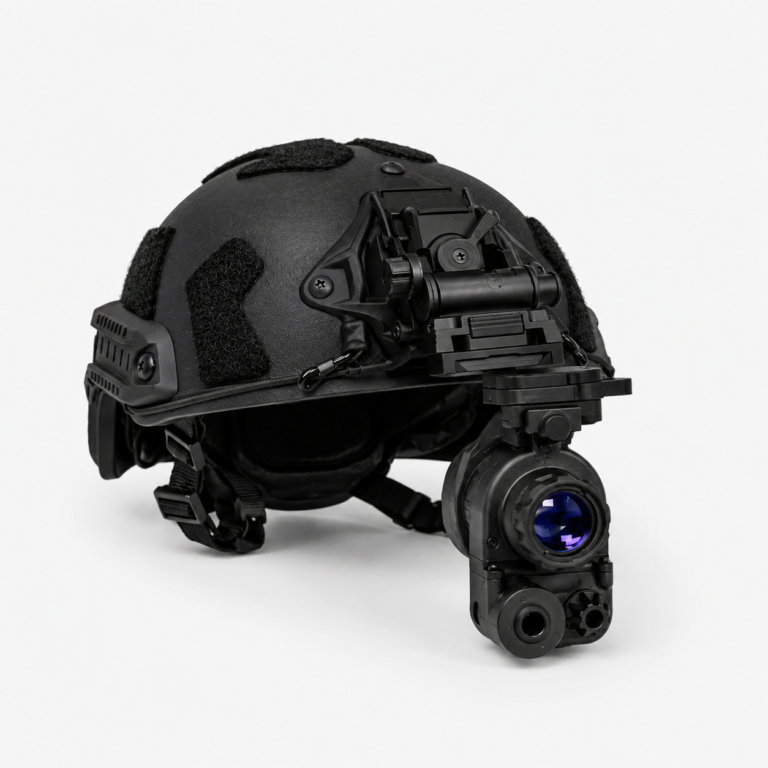
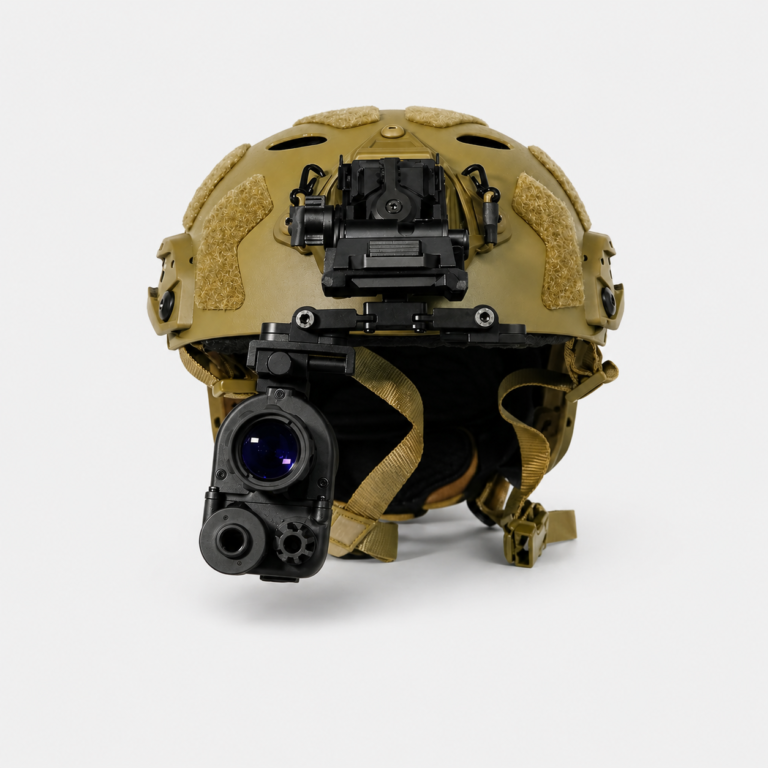
A helmet mounted night vision system allows users to operate the device without holding it.
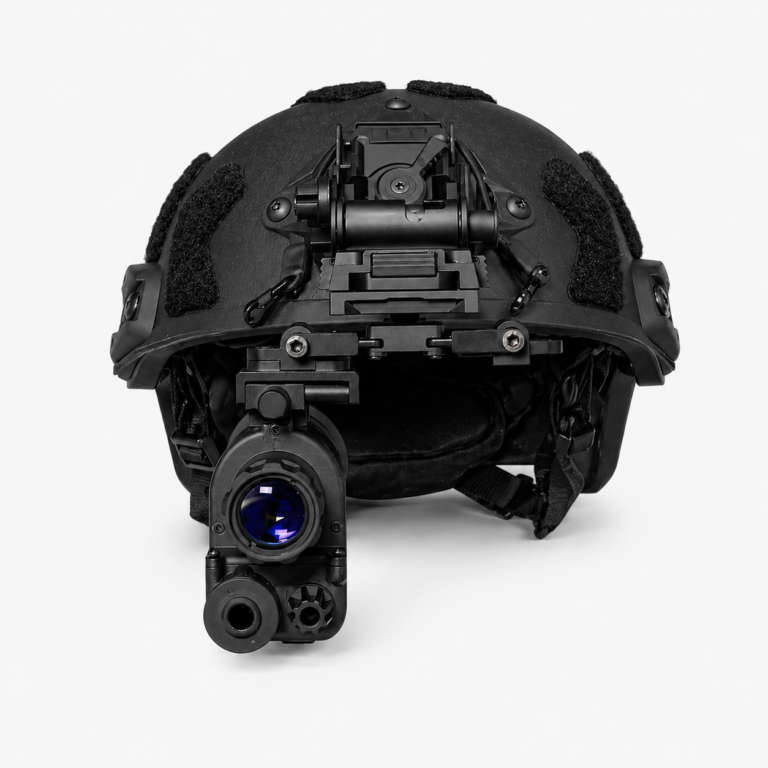
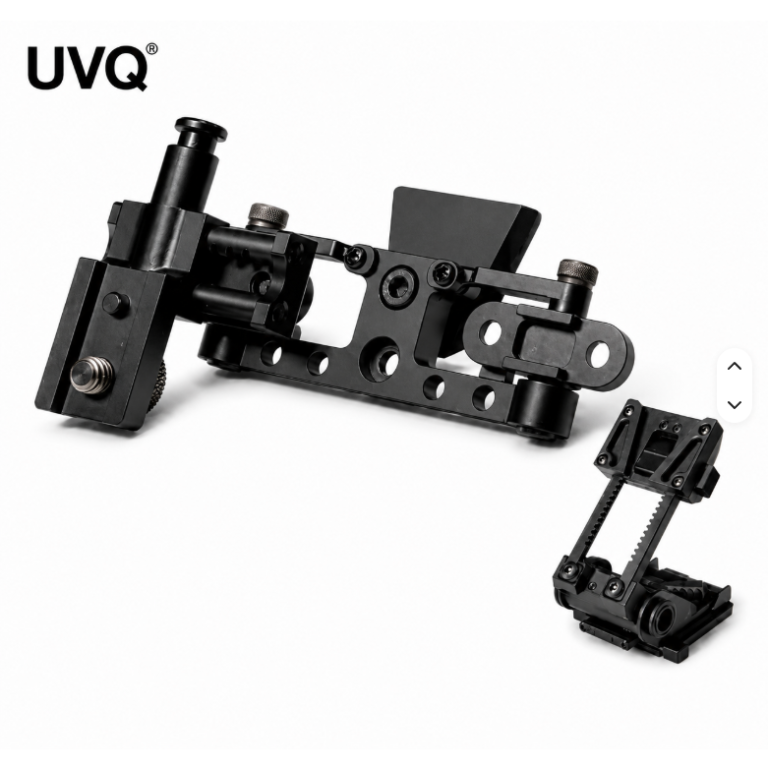
The device is attached to a helmet through mounting accessories such as:
- Flip-up mounts
- Rail adapters
- Helmet interfaces
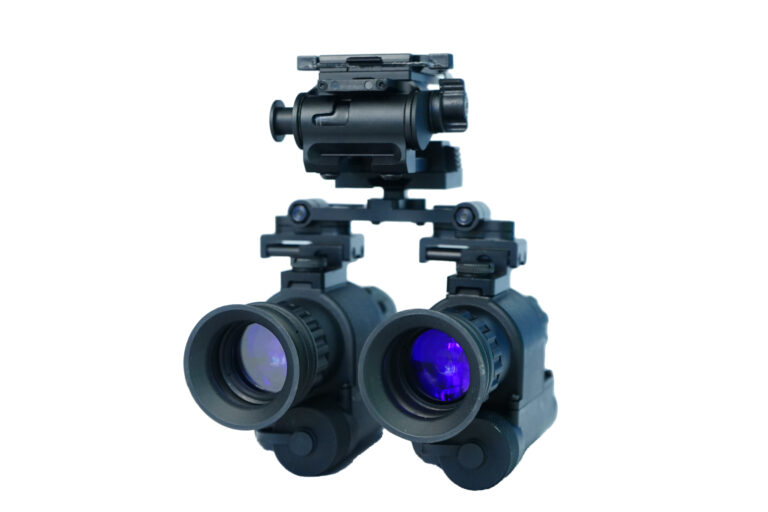
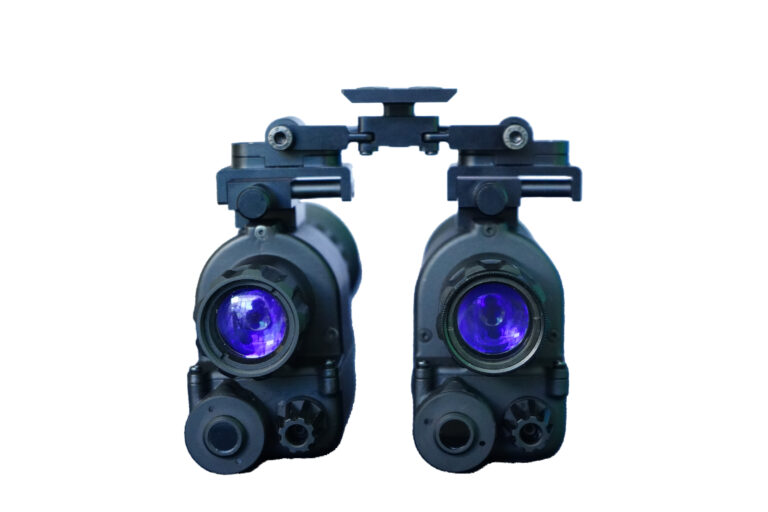
- Bridge systems
This configuration provides a more stable and comfortable viewing experience.
Advantages of Helmet Mounted Night Vision
Hands-Free Operation
Helmet mounted night vision provides hands-free operation and improved comfort for users who need longer observation periods.
The biggest advantage of helmet mounted night vision is that users can keep both hands available.
This is useful when users need to:
- Operate other equipment
- Move through outdoor environments
- Perform longer observation tasks
Better Comfort During Extended Use
Holding a device for a long time can create hand fatigue.
A helmet mounted setup transfers the weight to the mounting system, allowing more comfortable continuous observation.
Faster Switching Between Viewing and Normal Vision
Many helmet mounting systems support flip-up functions.
Users can quickly move the device away from their viewing position when normal vision is needed.
Helmet Mounted vs Handheld Night Vision: Key Differences
| Feature |
Handheld Night Vision |
Helmet Mounted Night Vision |
| Portability |
Excellent |
Good |
| Hands-free operation |
No |
Yes |
| Setup complexity |
Simple |
More advanced |
| Long observation comfort |
Medium |
Better |
| Accessory requirement |
Low |
Higher |
| Sharing between users |
Easy |
Less convenient |
| Professional configuration |
Basic |
Advanced |
Which Configuration Should You Choose?
The right choice depends on your intended use.
Choose Handheld Night Vision If:
You need:
- Lightweight equipment
- Quick observation
- Easy transportation
- Flexible operation
A handheld monocular is a practical choice for users who need a compact night vision solution.
Choose Helmet Mounted Night Vision If:
You need:
- Hands-free operation
- Longer observation sessions
- More stable viewing
- Integrated mounting capability
A helmet mounted setup provides better ergonomics for users who spend more time observing in low-light environments.
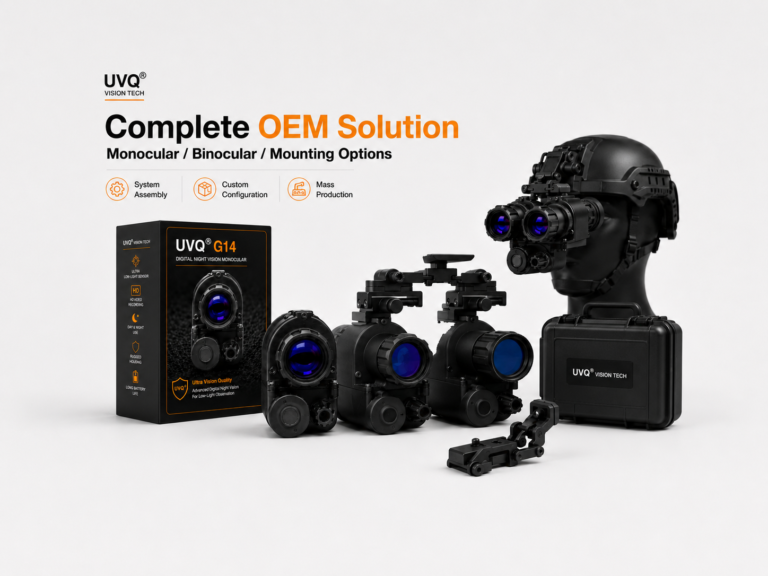
The UVQ G14 digital night vision platform supports multiple configurations to meet different user requirements.
Available configurations include:
This allows distributors, retailers, and end users to select different solutions based on their application needs.
How To Build a Complete Night Vision Setup
A complete helmet mounted night vision system usually includes:
1. Digital Night Vision Device
The core imaging unit provides low-light observation capability.
2. Mounting System
A suitable mount connects the device with the helmet and allows adjustment.
3. Helmet Configuration
Different helmet designs provide different levels of comfort and stability.
4. Accessories
Additional accessories can improve usability and customization.
For Dealers and OEM Partners
Different markets may require different configurations.
Some customers prefer simple handheld products for retail channels.
Others may need complete helmet mounted systems for professional users.
UVQ supports flexible product configurations, including:
- Monocular solutions
- Binocular setups
- Mounting accessories
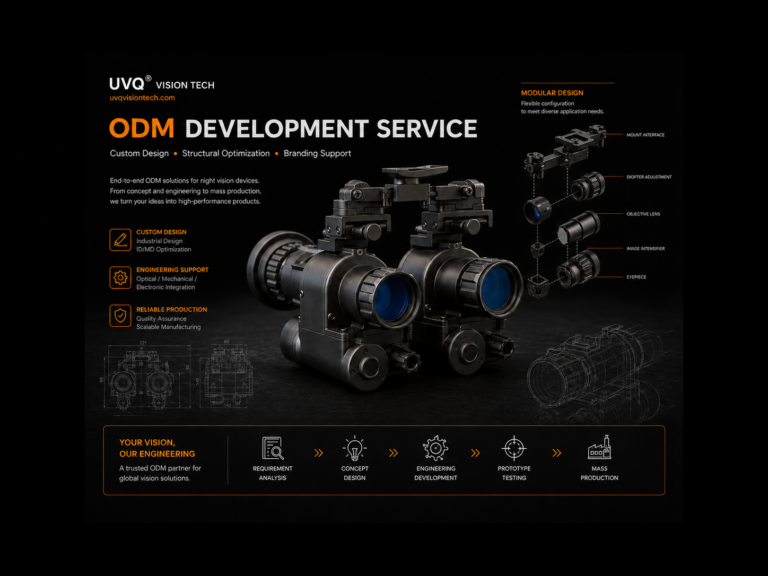
- OEM/ODM cooperation
This allows partners to develop product packages according to their target market.
Conclusion
Handheld and helmet mounted night vision systems are designed for different needs.
Handheld night vision provides flexibility, portability, and simple operation.
Helmet mounted night vision provides hands-free operation, better comfort, and a more integrated observation experience.
Before selecting a digital night vision solution, users should consider how long they will operate the device, whether they need hands-free use, and what configuration best matches their application.
Choosing the right setup can significantly improve the overall night vision experience.
The deciding factors are weight distribution and mounting hardware. The professional monocular with rail mount covers the single-tube route and the helmet-mounted binocular setup the dual-tube route. Lightweight helmet-mounted design and the measured UVQ G14 weight test give the numbers to compare against.
 English
  Chinese
 Spanish