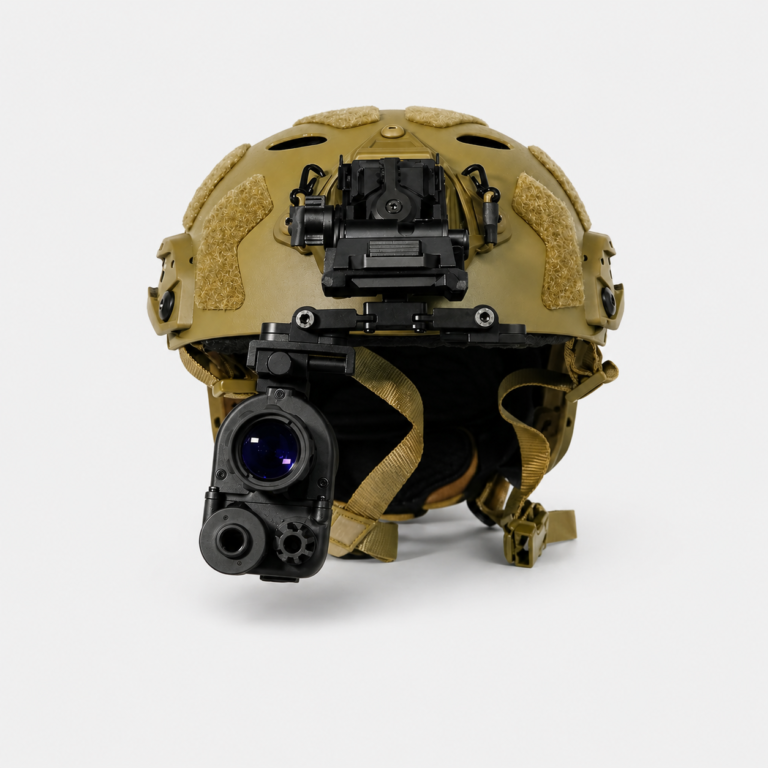
Quick answer: The UVQ G14 main unit weighs 246 g without battery and approximately 295 g with battery installed. The rail weighs approximately 70 g, the flip-up mount weighs approximately 150 g, and the complete monocular setup weighs approximately 515 g.
For helmet-mounted digital night vision, weight is more than a specification. The user feels the combined weight of the device, battery, rail, mount, and other hardware in front of the helmet.
This article uses real UVQ weight-test photos together with our current published product specifications to explain how the weight of a complete UVQ G14 setup is distributed.
What Is the UVQ G14 Weight?
The UVQ G14 has two important device-weight figures:
- Main unit without battery: 246 g
- Unit with battery installed: approximately 295 g
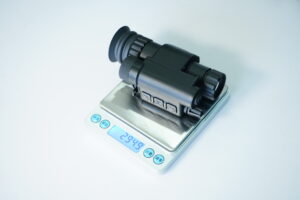
In our real weighing photo, the scale displays 294.9 g with the battery installed. For all published specifications, we round this to 295 g.
This keeps product pages, dealer materials, quotations, and international marketplace listings consistent.
UVQ G14 Weight Breakdown
The current UVQ G14 monocular configuration uses the following published weight figures:
| Component | Published Weight |
| G14 main unit without battery | 246 g |
| G14 with battery | 295 g |
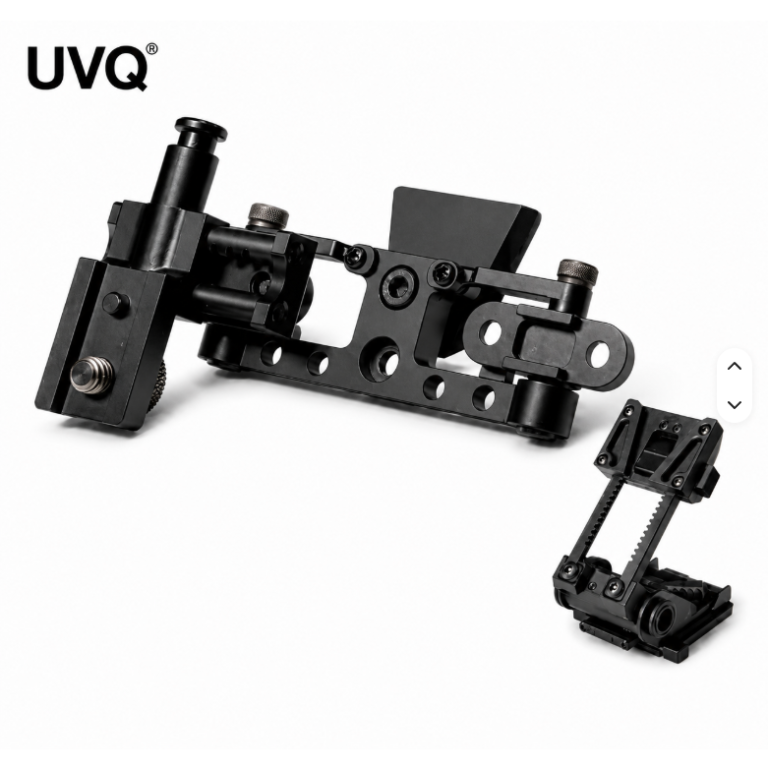
| Rail | 70 g |
| Flip-up mount | 150 g |
| Complete monocular setup | 515 g |
These are the figures we use consistently across our current international product information.
Why We Show Real UVQ G14 Weight Photos
Specifications are useful, but real photographs make the information easier to verify.
Our weight-test images show actual UVQ products and mounting components placed on a digital scale.
The purpose is not to create a second set of specifications based on every individual scale reading. Individual samples, batteries, hardware, and scale tolerances can produce small variations.
Instead, the photographs provide real-world evidence supporting the published UVQ G14 weight specifications.
Why 246 g and 295 g Are Different
The 246 g figure refers to the UVQ G14 main unit without battery.
Once the battery is installed, the working weight becomes approximately 295 g.
This distinction is important because night vision products are sometimes compared using different measurement conditions.
Before comparing two devices, buyers should confirm whether the listed weight refers to:
- The main unit only
- The unit with battery
- The unit with rail
- The unit with mounting hardware
- The complete ready-to-use setup
A weight comparison is only meaningful when the measurement conditions are the same.
How Much Does the UVQ G14 Rail Weigh?
The current published weight of the UVQ G14 rail is approximately 70 g.
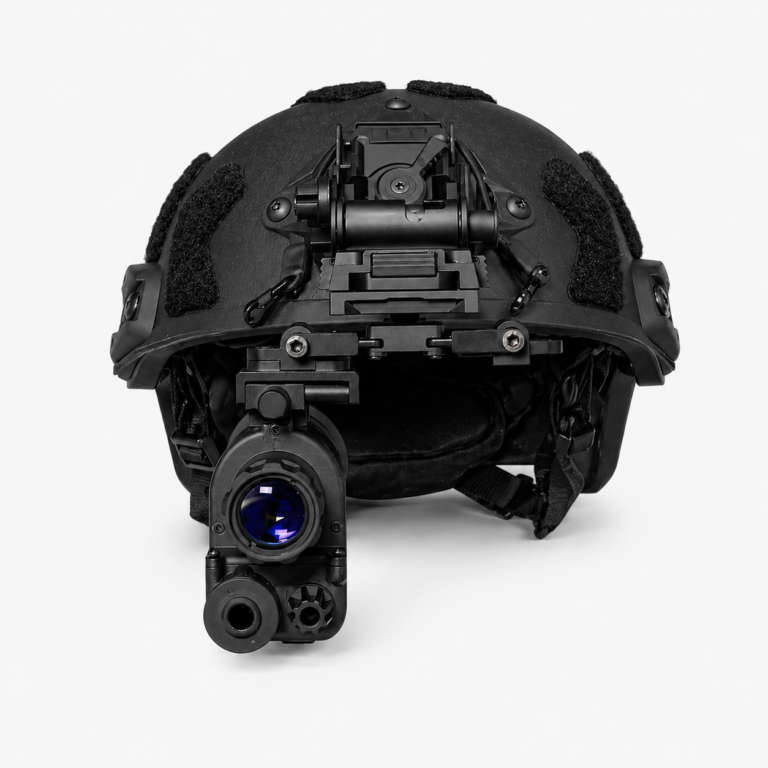
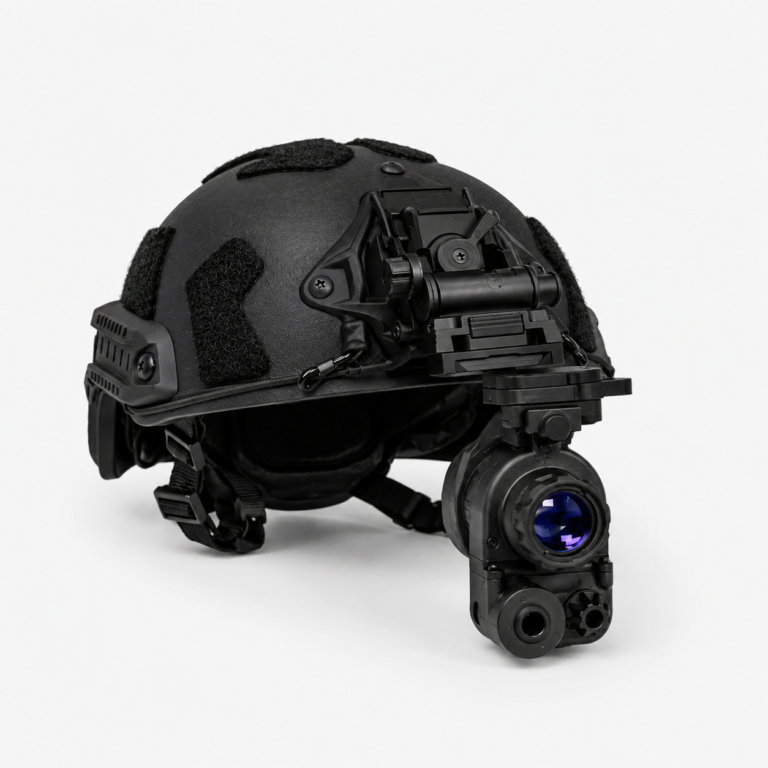
The rail forms part of the mounting system and contributes to the total weight of the configured monocular.
Although 70 g may appear small by itself, every component matters when the system is worn on a helmet for longer periods.
How Much Does the Flip-Up Mount Weigh?
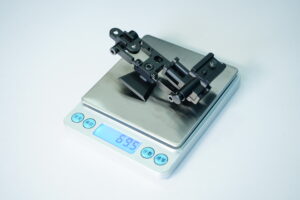
The UVQ G14 flip-up mount has a published weight of approximately 150 g.
The flip-up mount allows the device to be moved between viewing and raised positions while remaining attached to the helmet-mounted system.
Its weight therefore needs to be considered as part of the full configuration rather than as a separate accessory that has no effect on wearing comfort.
Real weighing image of UVQ G14 mounting hardware. The current published flip-up mount weight is approximately 150 g.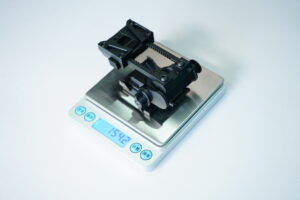
How Much Does the Complete UVQ G14 Setup Weigh?
The complete UVQ G14 monocular configuration weighs approximately 515 g.
This complete figure includes the device and the relevant mounting hardware used in the published configuration.
For buyers evaluating helmet-mounted night vision, the 515 g complete-system figure is more useful than looking only at the 246 g main-unit weight.
Why Complete Setup Weight Matters
A lightweight main device does not automatically mean that the complete helmet-mounted system will feel lightweight.
The user ultimately wears the entire configuration.
This may include:
- Digital night vision monocular
- Battery
- Rail
- Flip-up mount
- Helmet interface
- Other required mounting hardware
This is why UVQ publishes both device-level and complete-system weight information.
Weight Distribution Matters Too
Total mass is only one part of helmet-mounted comfort.
The location of that mass also matters.
A device positioned farther in front of the helmet creates more leverage than the same weight positioned closer to the user’s head.
Important factors include:
- Front-mounted weight
- Distance between the device and helmet
- Mount rigidity
- Viewing position
- Front-to-rear helmet balance
- Duration of use
For this reason, a helmet-mounted digital night vision product should be evaluated as a complete system.
Why Lightweight Design Matters for the UVQ G14
The UVQ G14 is designed for both handheld observation and helmet-mounted configurations.
Keeping the main device at 246 g without battery helps control the starting weight before batteries and mounting hardware are added.
With battery installed, the device remains approximately 295 g.
The complete published monocular setup is approximately 515 g.
This gives buyers a clearer picture of the weight they will actually need to manage in a complete configuration.
What Dealers Should Ask When Comparing Weight
For dealers and distributors, simply asking “How much does it weigh?” is not enough.
Useful questions include:
- What is the main-unit weight?
- Does that figure include the battery?
- What does the rail weigh?
- What does the flip-up mount weigh?
- What is the complete configured weight?
- Are real measurement photos available?
Clear answers make it easier to compare products fairly and explain them accurately to customers.
Real Measurements vs Marketing Language
The word “lightweight” is easy to use in marketing.
Real measurements are more useful.
This is why UVQ increasingly combines published specifications with real product photography and real weighing images.
For example, our real G14 scale photo shows 294.9 g with battery installed. The official published figure is 295 g.
The difference is simply normal rounding, not a different product specification.
UVQ G14 Weight Specification Summary
| Item | Official Weight | Explanation |
| G14 main unit | 246 g | Without battery |
| G14 working weight | 295 g | With battery installed |
| Rail | 70 g | Published rail weight |
| Flip-up mount | 150 g | Published mount weight |
| Complete monocular setup | 515 g | Published complete configuration weight |
Frequently Asked Questions About UVQ G14 Weight
How much does the UVQ G14 main unit weigh?
The UVQ G14 main unit weighs approximately 246 g without battery.
How much does the UVQ G14 weigh with battery?
The UVQ G14 weighs approximately 295 g with battery installed.
Why does the real scale photo show 294.9 g?
The 294.9 g scale reading is a real measurement from one unit. UVQ uses 295 g as the official rounded specification.
How much does the UVQ G14 rail weigh?
The published rail weight is approximately 70 g.
How much does the UVQ G14 flip-up mount weigh?
The published flip-up mount weight is approximately 150 g.
How much does the complete UVQ G14 monocular setup weigh?
The complete published monocular configuration weighs approximately 515 g.
Why should buyers look at complete setup weight?
Because the user wears the device together with its battery and mounting hardware. Complete system weight gives a more realistic indication of helmet-mounted load than the bare-device figure alone.
Final Answer
The UVQ G14 main unit weighs 246 g without battery and approximately 295 g with battery installed.
The rail weighs approximately 70 g, the flip-up mount approximately 150 g, and the complete monocular setup approximately 515 g.
Our real weight-test photographs provide visual evidence of the product and mounting components being weighed, while UVQ uses one consistent set of rounded official specifications across product pages, dealer materials, and international marketplace listings.
For us, lightweight design should be supported by clear numbers and real product evidence, not only by marketing language.
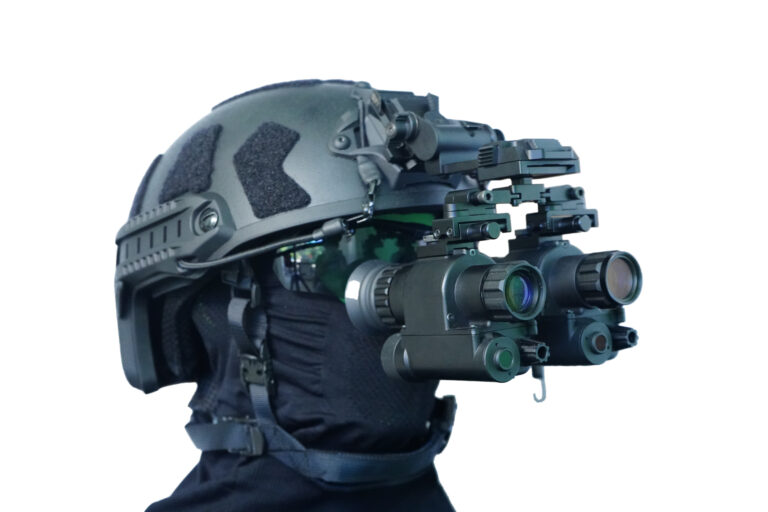
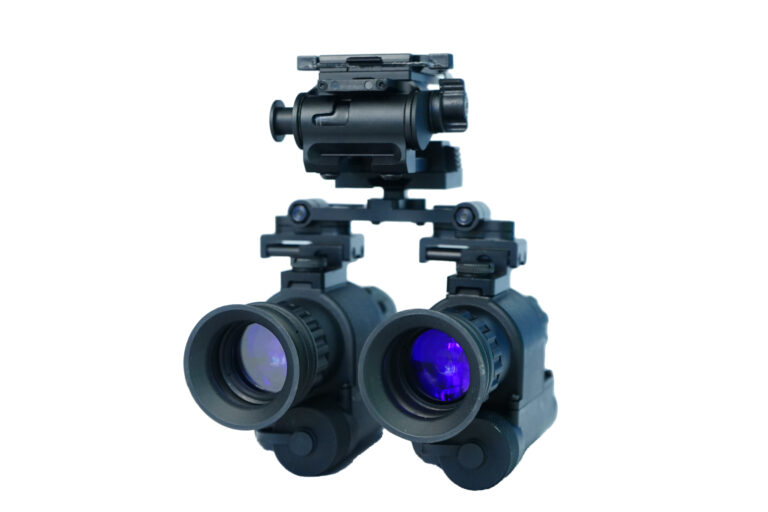
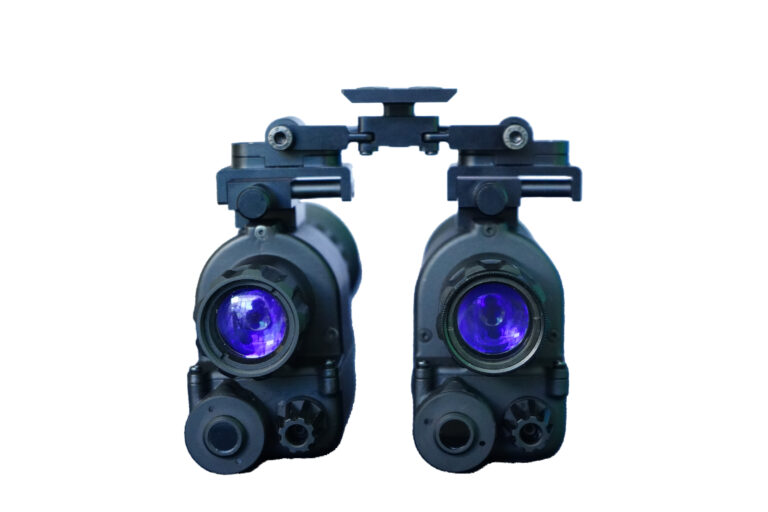
Weight only means something as a complete setup. The rail-mounted monocular and the binocular setup are the two configurations measured here. Lightweight helmet-mounted design and the accessories guide explain what can be removed.
 English
  Chinese
  Spanish