Choosing a digital night vision supplier is an important decision for B2B buyers, dealers, brand owners, and OEM/ODM partners.
A good supplier should not only provide a product. They should also support product testing, stable quality, clear communication, accessory planning, packaging, and long-term cooperation.
For buyers who plan to build a digital night vision product line, supplier selection can directly affect product quality, customer trust, and business growth.
This guide explains what B2B buyers should check before choosing a digital night vision supplier.
Why Supplier Selection Matters
Digital night vision products are not simple low-cost accessories.
They include sensors, lenses, image processing systems, displays, firmware, housings, mounts, recording functions, WiFi transmission, and packaging.
If the supplier does not control these details well, buyers may face problems such as unstable image quality, unclear specifications, delayed delivery, poor packaging, or weak after-sales support.
For B2B buyers, choosing the right digital night vision supplier can reduce risk and improve long-term business stability.
1. Check the Product Positioning
Before comparing suppliers, buyers should understand the product positioning.
Some digital night vision devices are designed for basic consumer use. Others are designed for more professional low-light observation, helmet-mounted use, dealer distribution, or OEM/ODM projects.
Buyers should ask:
- Is the product designed for handheld use only?
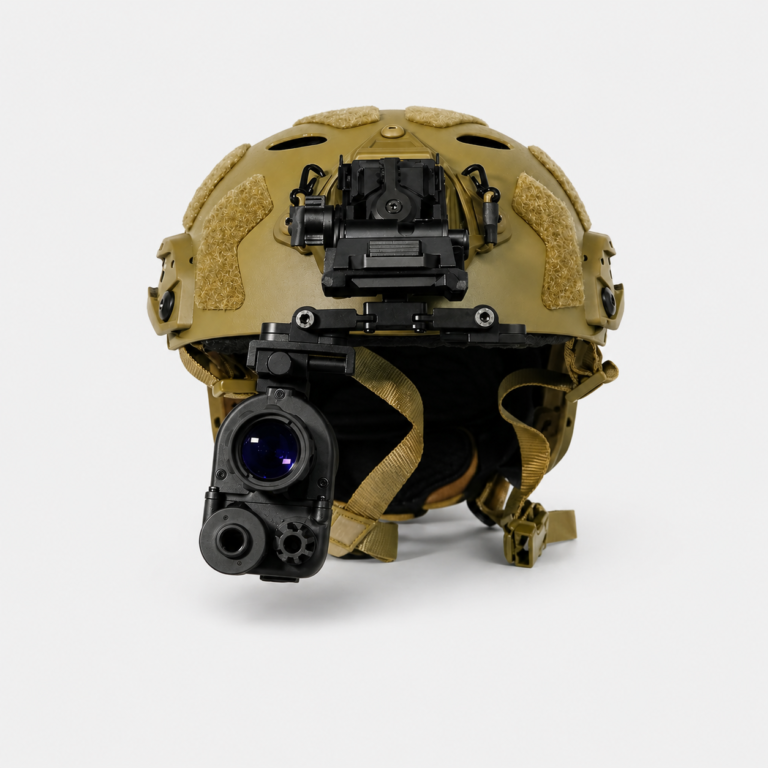
- Does it support helmet-mounted configuration?
- Does it support video recording?
- Does it support Android WiFi transmission?
- Does it have mounting accessories?
- Is it suitable for dealer or OEM/ODM sales?
A supplier should be able to explain where their product fits in the market.
2. Evaluate Real Low-Light Performance
Specifications are important, but real-world performance matters more.
A digital night vision supplier should be able to provide real test footage, product photos, and clear explanations about image performance.
Buyers should evaluate:
- Low-light image clarity
- Image brightness
- Noise control
- IR-assisted performance
- Movement smoothness
- Recording quality
- WiFi transmission quality
- Field demonstration results
Real test materials help buyers understand what the product can actually do.
3. Check Sensor and Image Processing Capability
Sensor performance is one of the most important factors in digital night vision.
A larger and more sensitive sensor can help improve light intake and image clarity in low-light conditions.
Image processing is also important because it affects brightness, noise control, contrast, and viewing smoothness.
For example, a digital night vision product with a 1-inch BSI CMOS sensor and high refresh rate imaging can provide a stronger technical foundation than many basic digital night vision products.
For B2B buyers, these specifications are also useful for product positioning and marketing.
4. Confirm Product Configuration and Accessories
A digital night vision supplier should provide clear information about product configurations.
Buyers should confirm:
- Standard package contents
- Optional accessories
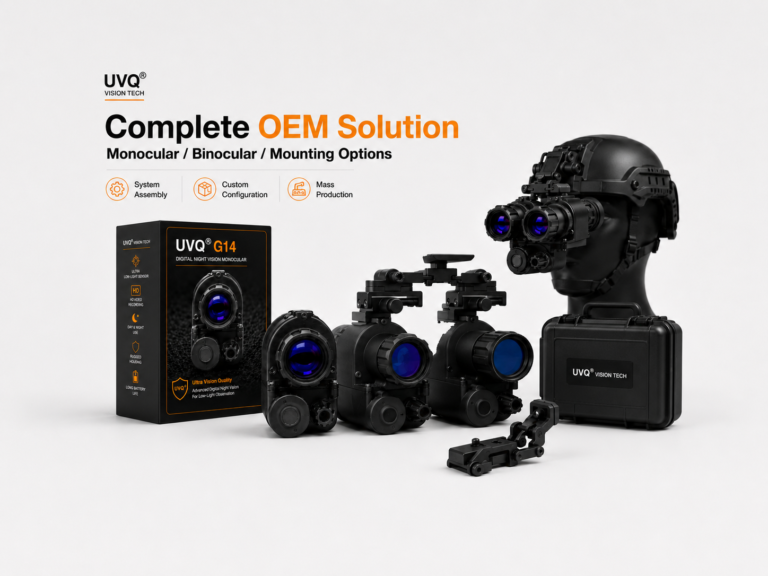
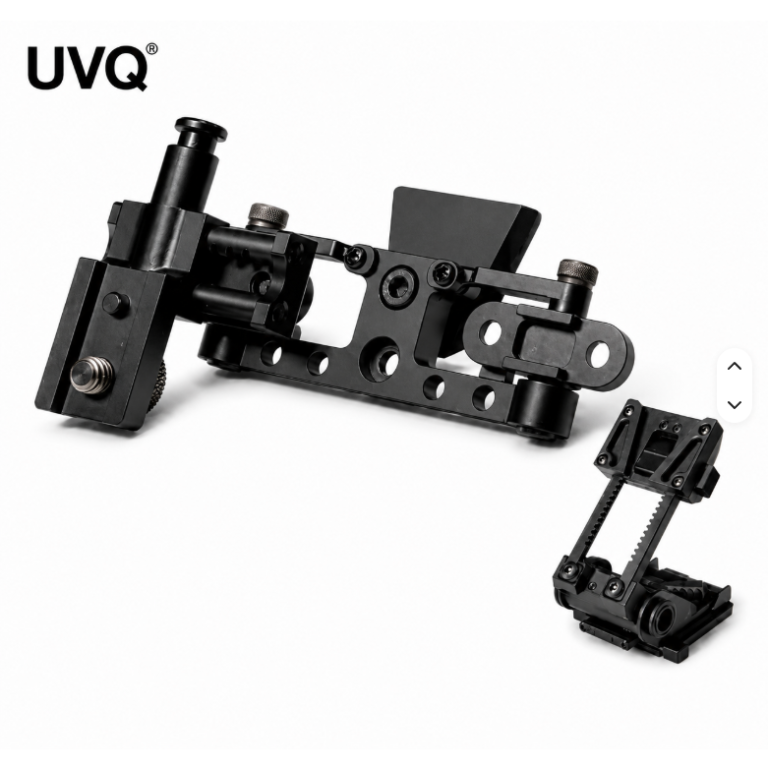
- Flip-up mount compatibility
- Rail mount options
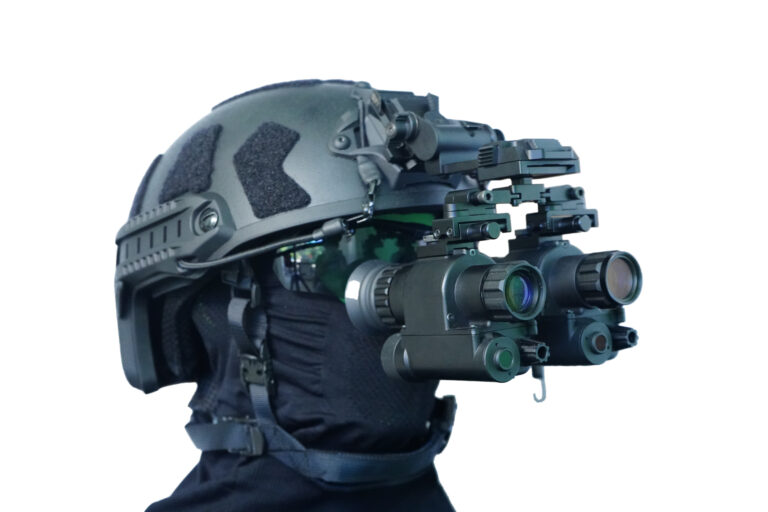
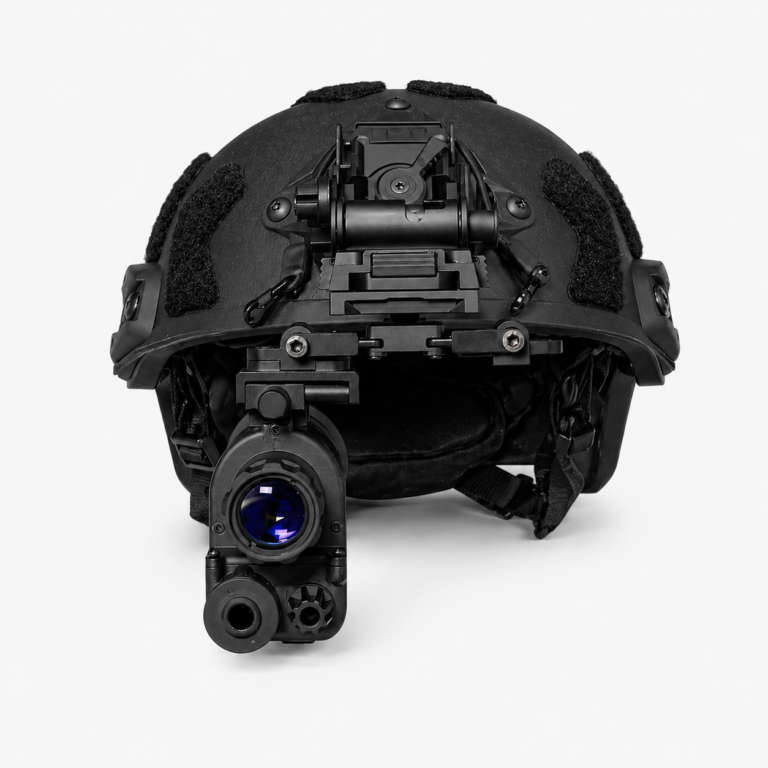
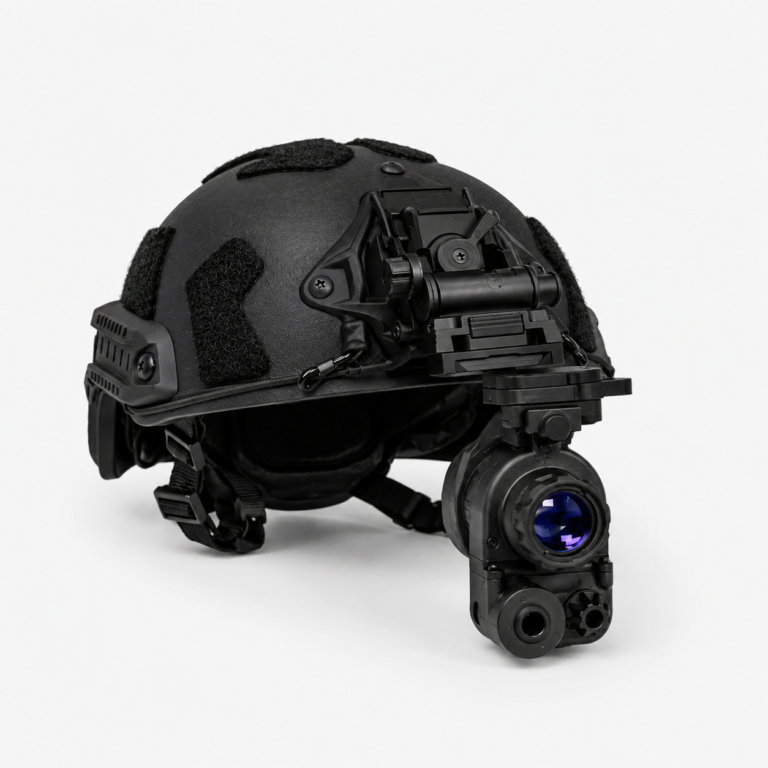
- Helmet-mounted configuration
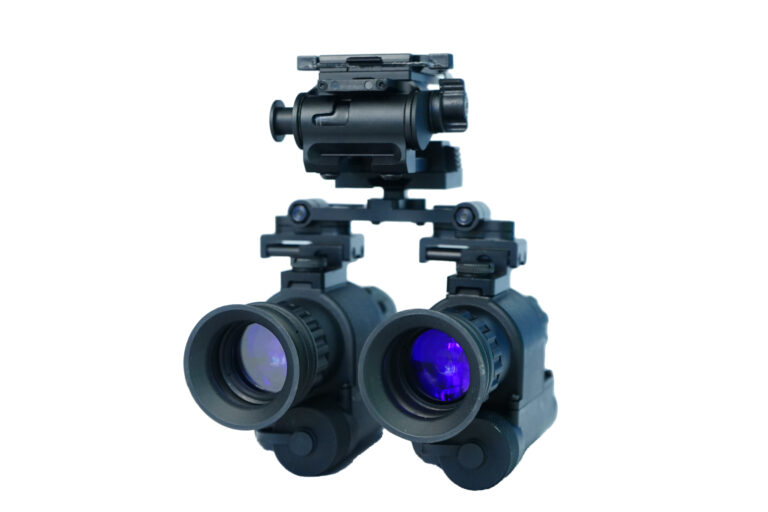
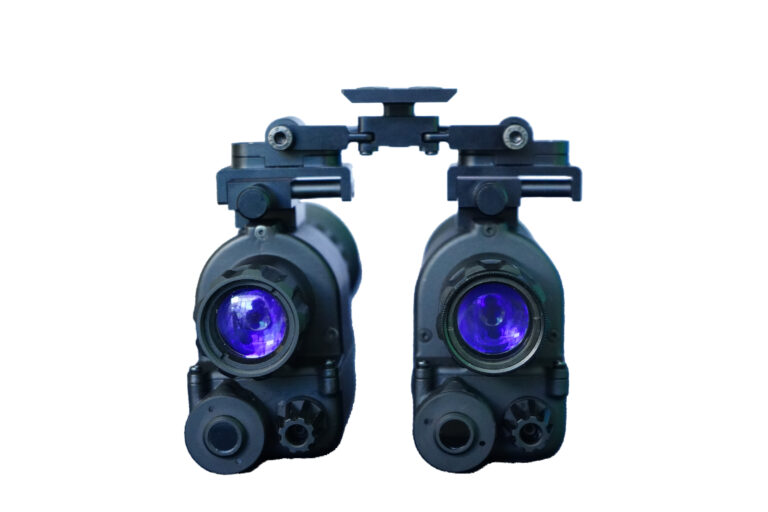
- Binocular bridge options
- Storage card and cable support
- Spare parts availability
Accessories are important because they can turn one core device into multiple product packages.
For dealers and OEM/ODM buyers, this flexibility can help serve different customer groups.
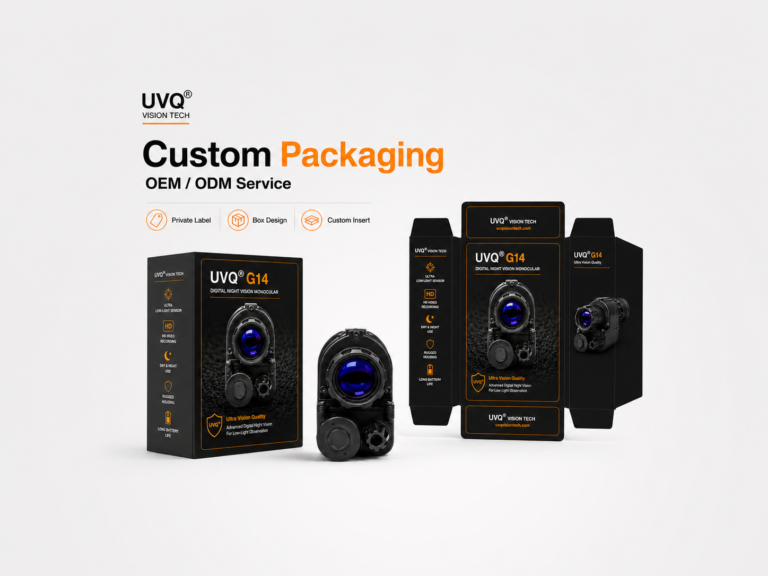
5. Review Packaging and Branding Support
Packaging is important for B2B orders.
A product with weak packaging may be difficult to sell through dealer, retail, or brand channels.
A good supplier should be able to support:
- Brand logo placement
- Product box design
- User manual customization
- QR code or website information
- Accessory layout
- Label and carton information
- Market-ready presentation
For OEM/ODM projects, packaging should match the product positioning and target market.
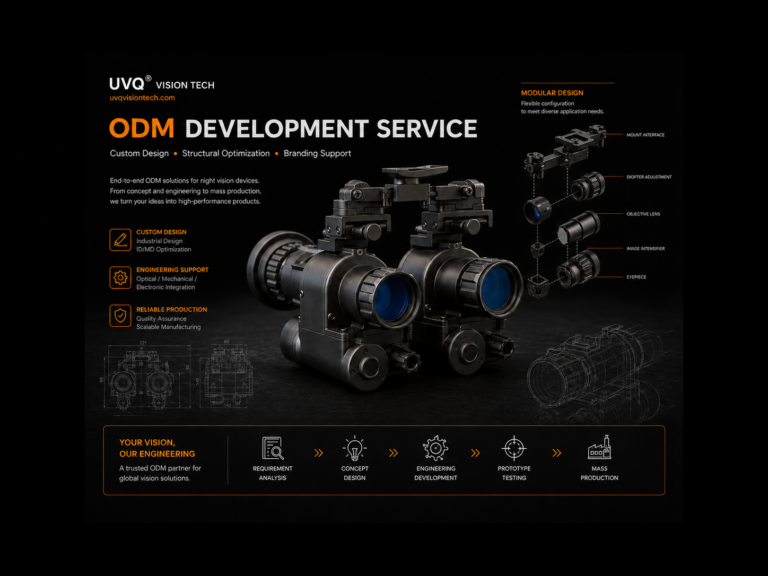
6. Ask About OEM/ODM Capability
For brand owners and distributors, OEM/ODM support can be important.
A capable digital night vision supplier should be able to discuss:
- Private label cooperation
- Logo customization
- Packaging customization
- Product configuration adjustment
- Manual and document support
- Sample testing process
- Bulk order planning
- Long-term supply cooperation
OEM/ODM is not only about printing a logo. It is about building a product solution that fits the buyer’s market.
7. Check Product Documentation
Good documentation makes B2B cooperation easier.
Buyers may need product information for websites, catalogs, dealer communication, social media, and customer presentations.
Useful documents include:
- Product specifications
- User manuals
- Product photos
- Test videos
- Packaging images
- Accessory lists
- Comparison materials
- Warranty information
A supplier that can provide clear product documentation can help buyers save time and improve sales efficiency.
8. Evaluate Communication Quality
Communication is a major part of international B2B cooperation.
A good supplier should respond clearly and explain product details accurately.
Buyers should pay attention to:
- Response speed
- Technical explanation ability
- Quotation clarity
- Sample arrangement
- Delivery schedule
- Packaging confirmation
- After-sales process
- Problem-solving attitude
If communication is unclear before the order, it may become more difficult after the order.
9. Check Quality Control and Consistency
For B2B orders, consistency is very important.
A sample may look good, but bulk orders must also maintain stable quality.
Buyers should ask about:
- Production inspection
- Image quality check
- Function testing
- Accessory inspection
- Packaging inspection
- Final shipment check
Quality control helps reduce returns, complaints, and after-sales pressure.
10. Consider Long-Term Cooperation
A good supplier should support long-term cooperation, not only one-time sales.
For dealers, distributors, and OEM/ODM buyers, long-term support may include:
- New product updates
- Accessory supply
- Packaging improvements
- Marketing material support
- Technical communication
- Warranty handling
- Replacement parts
- Product training materials
A reliable supplier can help buyers build a more stable product line.
UVQ G14 for B2B Digital Night Vision Buyers
The UVQ G14 digital night vision monocular is designed for low-light observation and B2B product cooperation.
It supports a 1-inch BSI CMOS sensor, 50/100Hz imaging, Android WiFi real-time transmission, video recording, manual IR illumination, lightweight body, and helmet-mounted configuration options.
For dealers, distributors, and OEM/ODM buyers, the UVQ G14 can support multiple product configurations, including handheld use, rail mount setup, flip-up mount setup, helmet-mounted use, binocular bridge setup, and customized packaging support.
This flexibility makes it suitable for buyers who want to build a digital night vision product line with clear technical positioning and practical accessory options.
Final Thoughts
Choosing a digital night vision supplier is not only about finding the lowest price.
B2B buyers should evaluate product quality, real test performance, sensor capability, accessory configuration, packaging, documentation, communication, quality control, and long-term support.
A strong supplier should help buyers reduce risk, present the product clearly, and build a more reliable product offering.
For B2B buyers planning digital night vision orders, supplier selection is the first step toward building a stable and competitive product line.
Once a supplier list is shortlisted, the practical test is whether the hardware can be compared on published specifications. The UVQ G14 digital night vision monocular publishes its core figures, and the UVQ G14 OEM solution covers private-label routes. Our OEM/ODM buyer guide walks through the sourcing questions, while the brand evaluation guide and the UVQ G14 page for B2B buyers cover evaluation and ordering.

 English
  Chinese
 Spanish