Quick answer: The best digital night vision monocular for dealers should provide practical low-light imaging, 1x viewing, smooth refresh rate, video recording, WiFi transmission, helmet-mounted configuration options, clear accessories, reliable packaging, and strong B2B support. Dealers should not choose only by price or by one specification number.
For dealers and distributors, choosing a digital night vision monocular is different from choosing a device for personal use.
A dealer needs a product that is easy to explain, easy to demonstrate, easy to package, and suitable for different customer needs. The product should also have enough technical strength to support long-term sales instead of only short-term interest.
This guide explains what dealers should look for when choosing a digital night vision monocular.
What Should Dealers Look for First?
Dealers should first evaluate whether the digital night vision monocular has real product value.
A product may look attractive in photos, but dealers need to check whether it can support actual customer questions, product demonstrations, and after-sales communication.
Important areas include:
- Low-light imaging performance
- Sensor size and image quality
- Refresh rate and viewing smoothness
- 1x base magnification
- IR support
- Video recording
- WiFi transmission
- Helmet-mounted configuration
- Accessory options
- Packaging and documentation
- OEM/ODM support
A strong dealer product should be practical, explainable, and easy to build into different sales packages.
Is Low-Light Imaging the Most Important Factor?
Yes. Low-light imaging is one of the most important factors in a digital night vision monocular.
Dealers should check whether the device can provide usable images in real outdoor low-light environments.
When evaluating low-light performance, dealers should review:
- Real outdoor test footage
- Image clarity
- Noise control
- Brightness handling
- IR on and IR off comparison
- Performance in different environments
Specifications are useful, but real footage is more important for dealer confidence. Customers often want to see how the device performs before they buy.
Why Sensor Size Matters for Dealers
Sensor size can affect the imaging foundation of a digital night vision monocular.
A larger and more capable sensor can help collect more light and support better low-light image quality.
For dealers, sensor information is useful because it gives them a clear technical point to explain to customers.
However, sensor size should not be the only selling point. Dealers should also evaluate lens design, image processing, display quality, firmware tuning, and real-world footage.
Why 1x Viewing Is Important
1x base magnification is important because it helps provide a more natural viewing scale.
For digital night vision monoculars, strong magnification may sound attractive, but it is not always better for general observation.
1x viewing is useful for:
- Outdoor observation
- Helmet-mounted use
- Scanning nearby surroundings
- Reducing visual discomfort
- Supporting more natural movement
Dealers should explain that 1x base viewing can be more practical than high magnification for many real-use scenarios.
Does Refresh Rate Matter?
Yes. Refresh rate affects how smooth the image feels during observation.
This is especially important when users move the device, scan an area, or use the monocular in a helmet-mounted setup.
A smoother viewing experience can help improve:
- Motion comfort
- Scanning experience
- Helmet-mounted usability
- Customer demonstration quality
- Overall product impression
Dealers should compare refresh rate together with real movement footage instead of looking at the number alone.
Why Recording Is Useful for Dealers
Video recording is a practical advantage of digital night vision.
For dealers, recording support can help in several ways:
- Saving test footage
- Preparing product demonstrations
- Training sales teams
- Explaining image performance to customers
- Creating marketing materials
- Supporting after-sales communication
A digital night vision monocular with recording support can give dealers more content for product education and promotion.
Why WiFi Transmission Helps Product Demonstration
WiFi transmission can be useful when a dealer needs to show the image output to another person.
Instead of only one user looking through the device, WiFi transmission can allow the image to be displayed on a compatible mobile device.
This helps dealers during:
- Customer demonstrations
- Sample testing
- Training sessions
- Product comparison
- Video content preparation
Dealers should check connection stability, mobile compatibility, image delay, and setup difficulty.
Should Dealers Choose a Helmet-Mounted Option?
Yes, dealers should consider digital night vision monoculars that support helmet-mounted configuration options.
Not every customer needs helmet-mounted use, but having this option increases product flexibility.
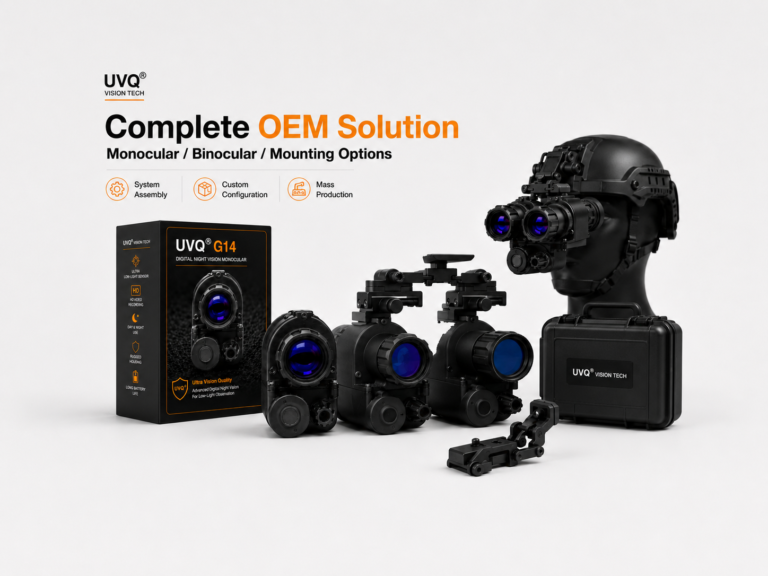
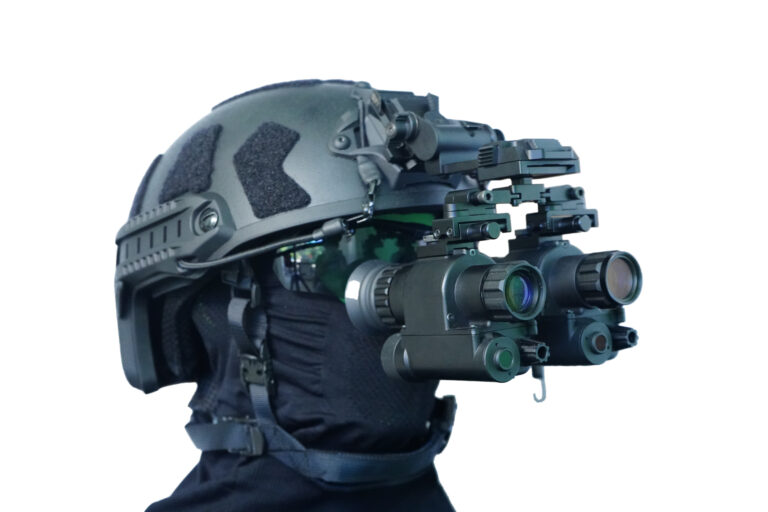
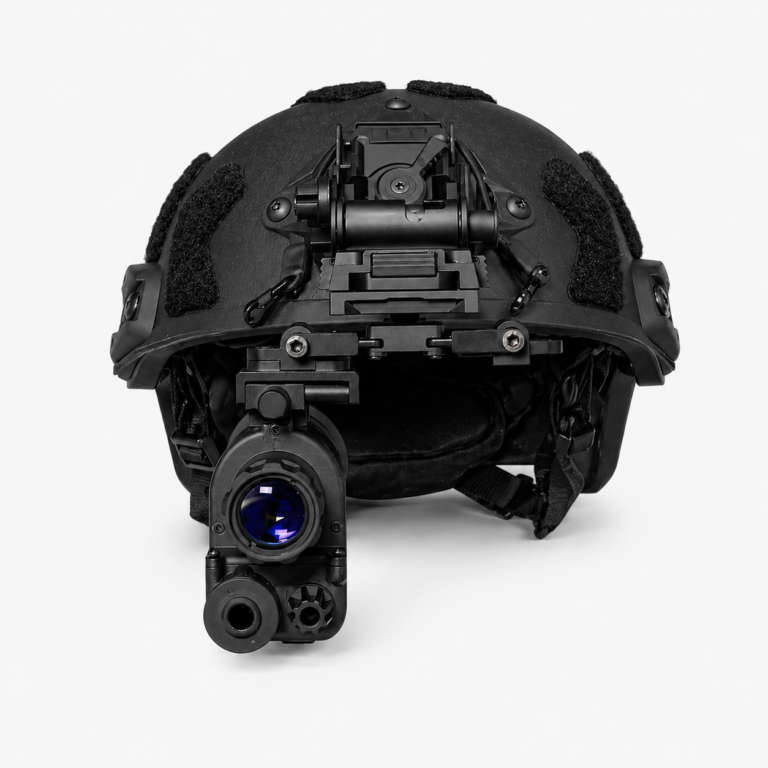
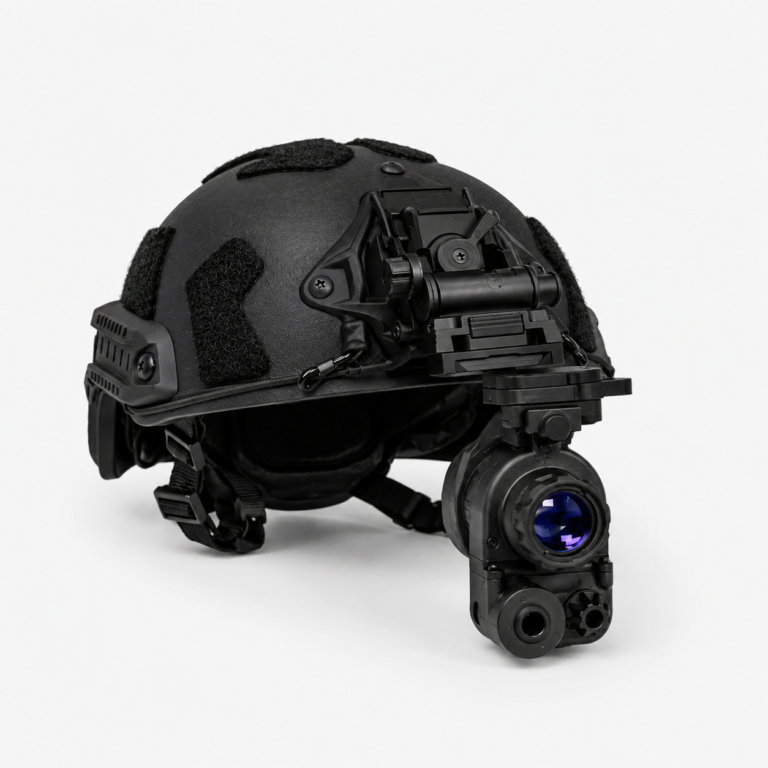
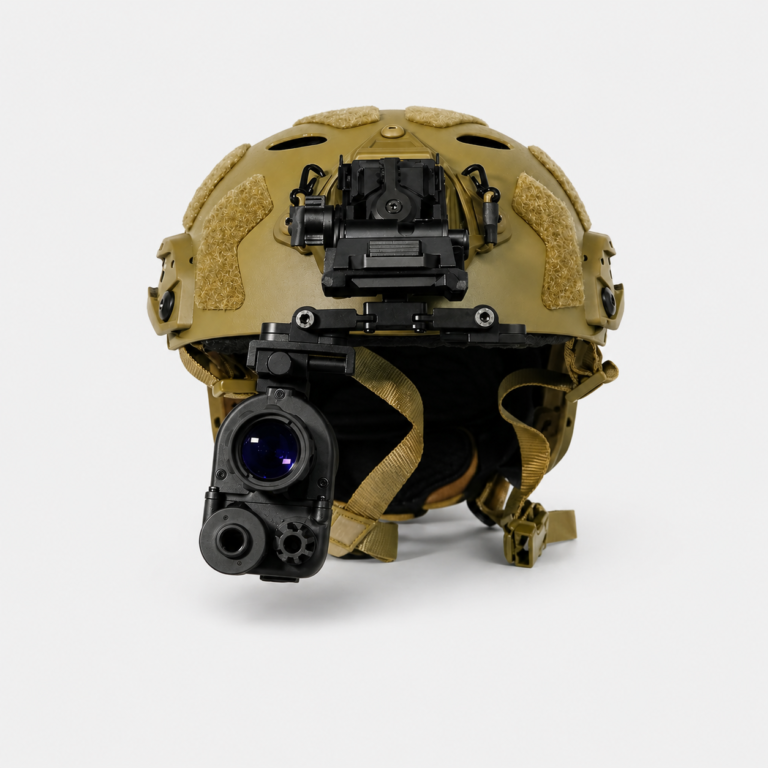
A helmet-mounted package may include:
- Digital night vision monocular
- Rail adapter
- Flip-up mount
- Helmet interface
- Mounting screws or adjustment parts
This type of package helps dealers present the product as a complete system instead of only a single device.
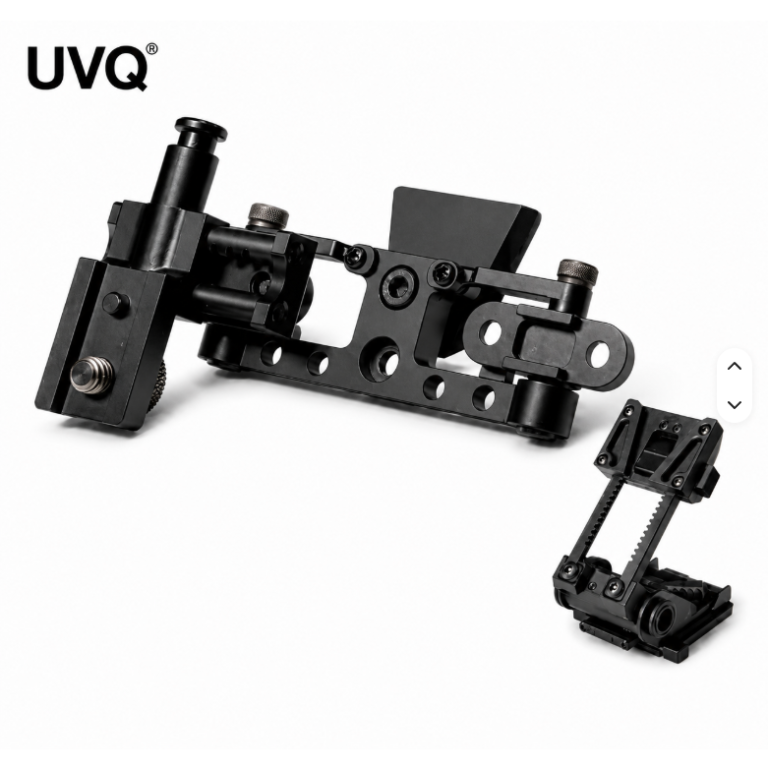
Why Accessories Matter
Accessories can affect how easy the product is to sell and use.
Dealers should check whether the supplier can provide clear accessory options, such as:
- Rail adapter
- Flip-up mount
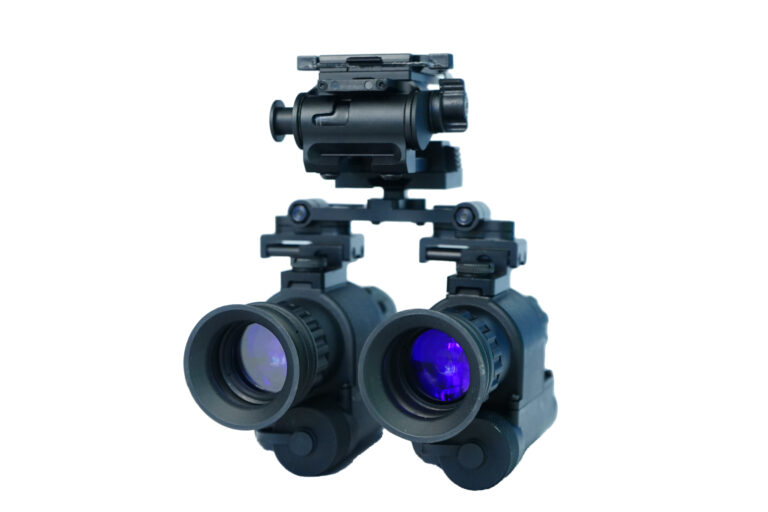
- Bridge system
- Carrying case
- USB Type-C cable
- Lens protection accessories
- Packaging support
Clear accessory information helps dealers build different product packages and avoid confusion during quotation.
Should Dealers Offer Monocular and Binocular Packages?
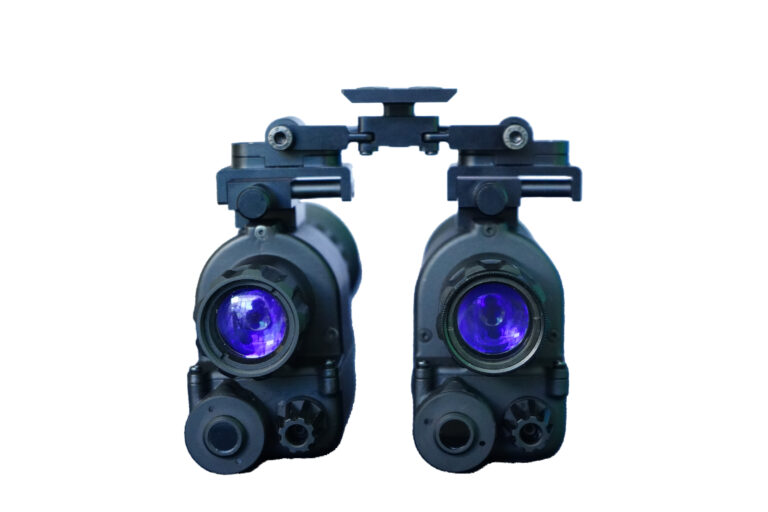
Dealers can offer both monocular and binocular configuration options if the product platform supports them.
A monocular package is usually easier for first-time buyers. It is lighter, simpler, and more flexible.
A binocular package can provide a more complete viewing configuration and stronger demonstration value, but it requires more accessories and more careful adjustment.
For many dealers, a practical strategy is to start with a monocular package and offer binocular configuration as an advanced option.
What B2B Support Should Dealers Expect?
Dealers should not evaluate only the device. They should also evaluate supplier support.
Useful B2B support may include:
- Product photos
- Real test videos
- Specification sheet
- User manual
- Quick start guide
- Packaging information
- Accessory list
- OEM/ODM support
- Sample order support
- After-sales communication
A good dealer product should come with the materials needed to help dealers sell, explain, and support the product.
What Mistakes Should Dealers Avoid?
Dealers should avoid choosing a digital night vision monocular based only on a low price.
Common mistakes include:
- Choosing only by price
- Ignoring real test footage
- Ignoring complete setup weight
- Ignoring accessory compatibility
- Ignoring packaging quality
- Ignoring product documentation
- Ignoring after-sales support
- Overlooking customer education materials
A low purchase price may not create a strong product line if the dealer cannot explain, demonstrate, and support the product clearly.
UVQ G14 as a Digital Night Vision Monocular for Dealers
The UVQ G14 digital night vision monocular is designed for low-light observation, product demonstration, helmet-mounted configuration, recording, Android WiFi transmission, and B2B cooperation.
Key features include:
- 1-inch BSI CMOS sensor
- 50/100Hz imaging
- 1x base magnification
- Digital zoom options
- Manual IR illumination
- Video recording and image capture
- Android WiFi real-time image transmission
- 32GB built-in storage
- USB Type-C data transfer
- IP67 waterproof protection
- Lightweight body design
- Helmet-mounted configuration options
- Monocular and binocular package possibilities
For dealers and distributors, the UVQ G14 can be used as a core product platform for basic monocular packages, helmet-mounted packages, accessory bundles, dealer demonstrations, and OEM/ODM cooperation.
Quick Dealer Checklist
| Dealer Question |
What to Check |
| Is the image useful in real low-light conditions? |
Review real outdoor test footage. |
| Is the product easy to explain? |
Check sensor, refresh rate, 1x viewing, recording, and WiFi features. |
| Can it be demonstrated clearly? |
Check recording, WiFi transmission, and sample videos. |
| Can it support different packages? |
Check handheld, helmet-mounted, accessory, and binocular options. |
| Is the supplier ready for B2B cooperation? |
Check documentation, packaging, OEM/ODM support, and sample support. |
Frequently Asked Questions
What is the best digital night vision monocular for dealers?
The best digital night vision monocular for dealers should combine real low-light performance, 1x viewing, smooth refresh rate, recording, WiFi transmission, mounting flexibility, accessory support, and reliable B2B cooperation.
Should dealers choose a monocular or binocular setup?
Many dealers can start with a monocular package because it is lighter, simpler, and easier to sell. A binocular setup can be offered as an advanced configuration for customers who want a more complete package.
Why is real test footage important?
Real test footage helps dealers and customers understand actual low-light performance instead of relying only on specification sheets or product photos.
Why does WiFi matter for dealers?
WiFi transmission can help dealers demonstrate the image output on a mobile device, making product presentation and customer explanation easier.
Is OEM/ODM support important for dealers?
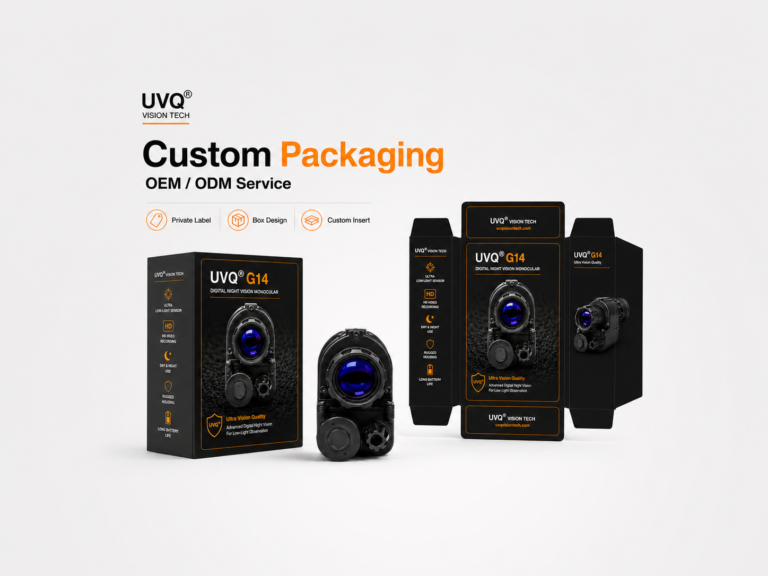
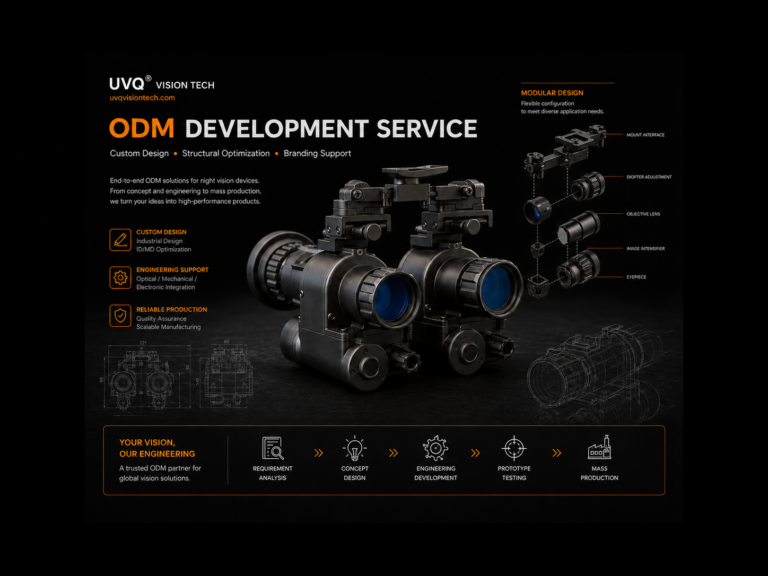
Yes. OEM/ODM support can help dealers and brand owners create customized packaging, product materials, private label options, and market-ready product packages.
Final Answer
The best digital night vision monocular for dealers is not simply the cheapest model or the product with the longest specification sheet.
Dealers should choose a device that provides practical low-light imaging, clear product features, real test footage, recording, WiFi transmission, helmet-mounted options, accessory support, reliable packaging, and B2B cooperation.
The UVQ G14 is designed as a flexible digital night vision monocular platform for dealers, distributors, and OEM/ODM buyers who need a product that can support sample testing, product demonstration, package building, and long-term sales development.
Dealers evaluating a range usually want to test before committing to stock. The UVQ G14 demo kit is assembled for that, while the UVQ G14 digital night vision monocular is the base platform most orders build on. For positioning the range to end customers, see the dealer explanation guide and the sample testing guide; terms for stockist and bulk orders are set out on the dealer program page.
 English
  Chinese
 Spanish