
Digital night vision shipping is an important part of international B2B delivery. Buyers often focus first on specifications, imaging performance and price, but they also need to understand how the equipment will be organized and protected before it leaves the supplier.
A reliable packing process requires more than placing several product boxes inside a larger carton. The model, configuration, accessories and quantity must first be checked. Each device then needs individual protection, while the complete shipment needs internal separation and cushioning to reduce movement during handling.
The photographs in this article show a real UVQ multi-unit packing process. They document how UVQ G14 devices and their accessories are organized, protected and prepared before the shipping carton is sealed.

Why Digital Night Vision Shipping Requires Protective Packing
Digital night vision devices contain lenses, displays, sensors, adjustment controls and electronic components. Even when the product housing is designed for outdoor use, the equipment still needs suitable protection during transportation.
A shipping carton may pass through several stages before delivery:
- Warehouse handling
- Local transportation
- Export processing
- Airport or logistics-hub handling
- International transportation
- Customs inspection
- Final delivery
During these stages, the carton may experience vibration, stacking pressure and repeated movement. Proper packing helps keep the devices separated and reduces unnecessary contact between the main units, mounting components and accessories.
For B2B buyers, packaging is also part of the delivery standard. Dealers and distributors need products that arrive organized, identifiable and ready for inspection, demonstration or resale.
Step 1: Checking the Order Configuration Before Packing
The first step is to arrange the products and confirm the order configuration.
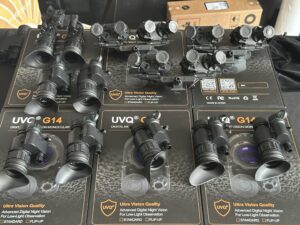
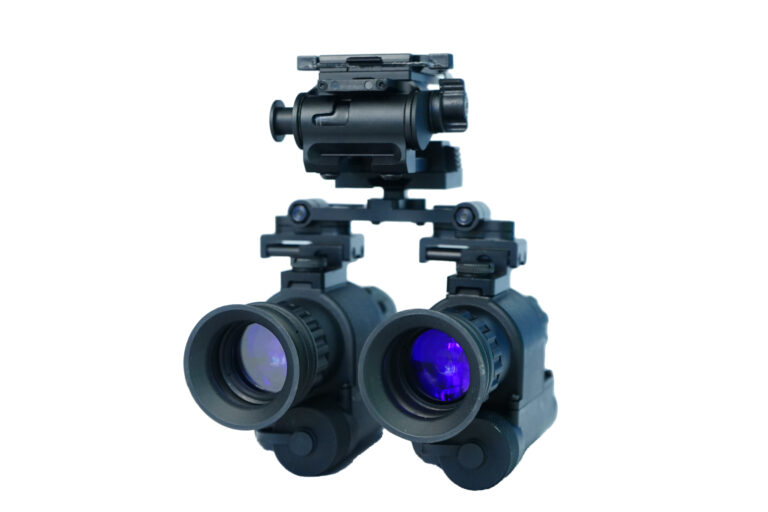
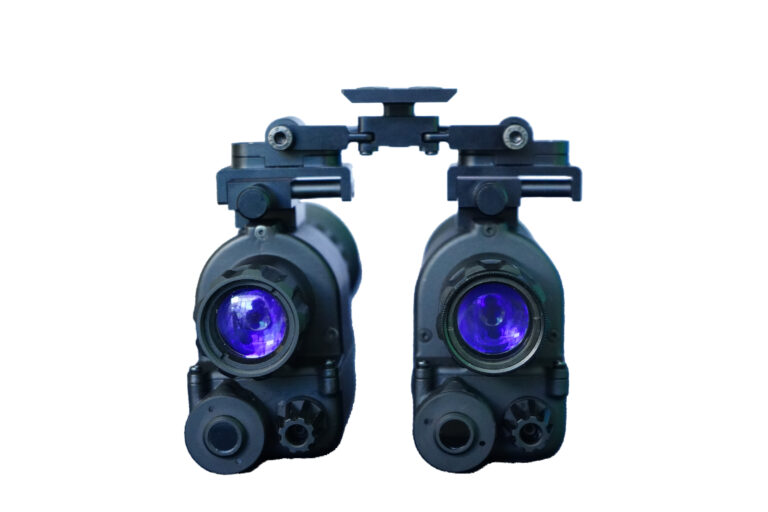
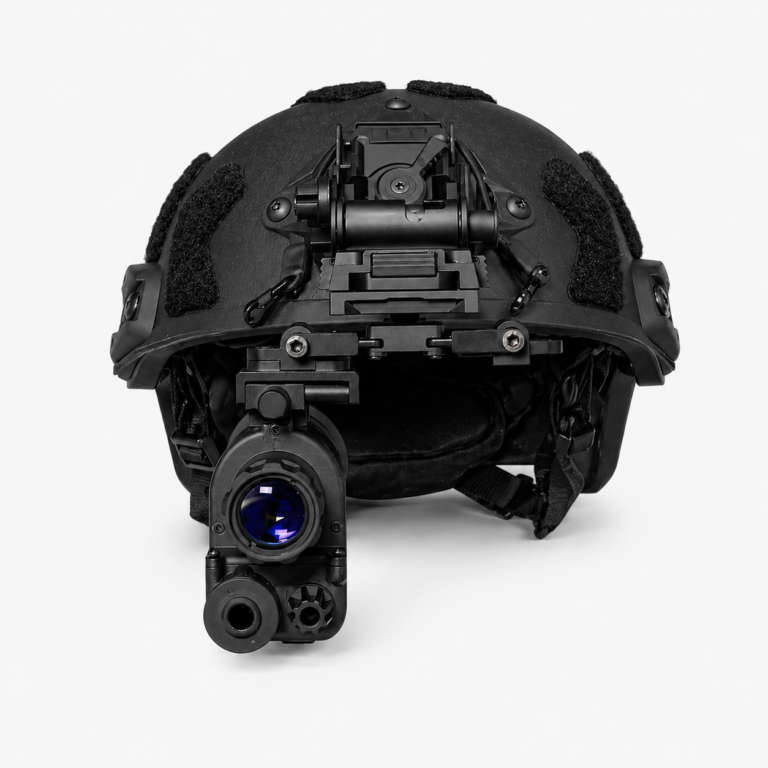
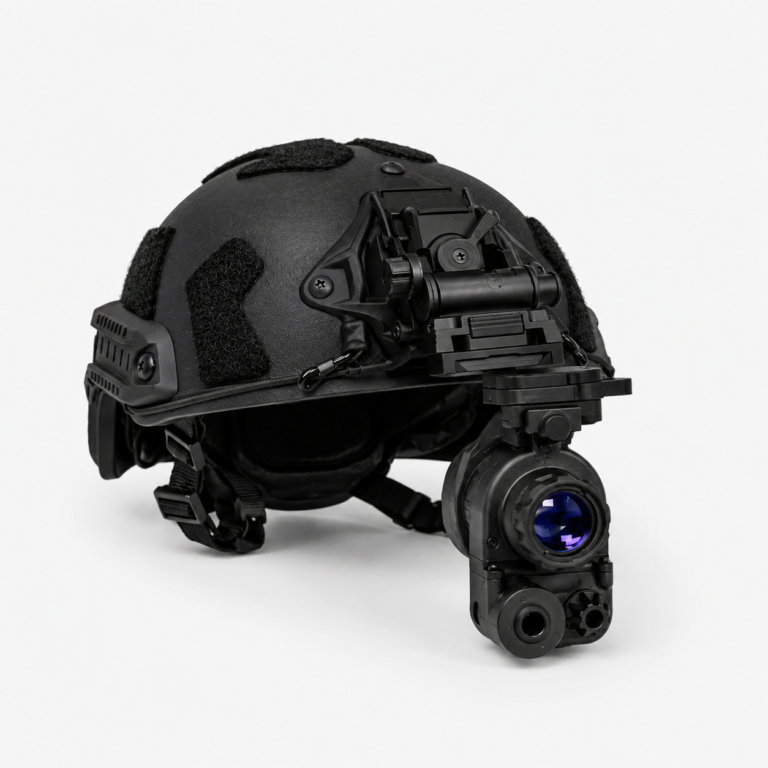
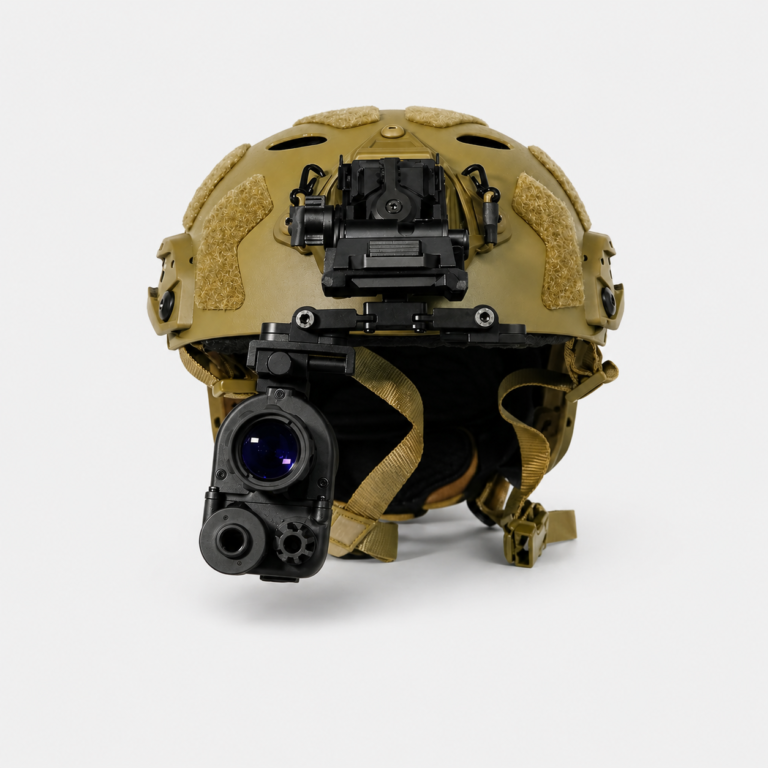
The photographs show multiple UVQ G14 units positioned with their corresponding product boxes. Some devices are prepared as monocular configurations, while others use bridge or mounting components for different setups.
Configuration checking is an essential part of digital night vision shipping, especially when one order contains different mounting and accessory combinations.
Before packing, the visible items should be checked against the order information, including:
- Product model
- Monocular or dual-eye configuration
- Number of devices
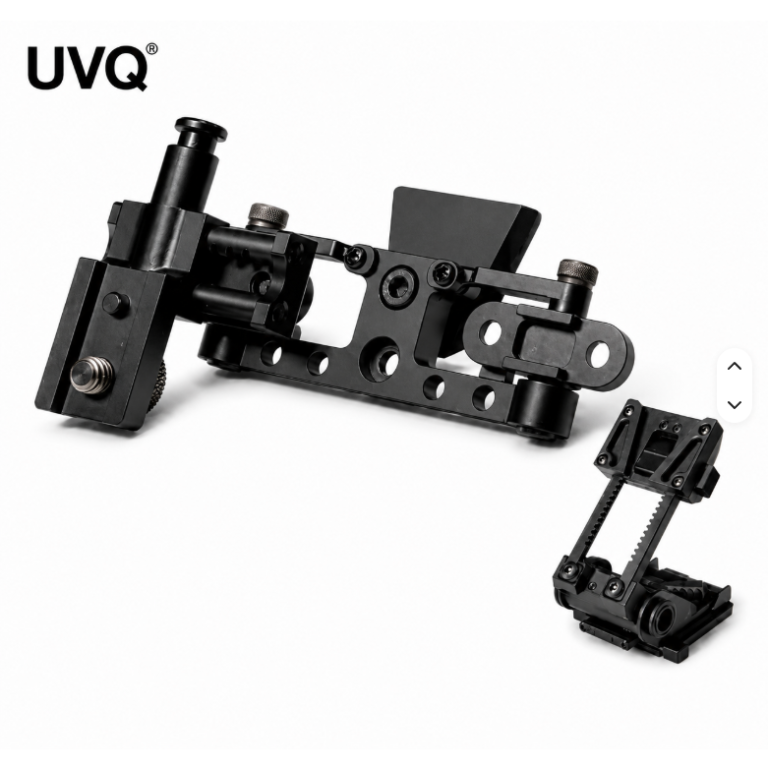
- Mounting rail or bridge configuration
- Flip-up mount, when included
- Batteries, cables and other specified accessories
- Product documentation
- Package version
This step is especially important because the UVQ G14 can be supplied in different configurations. A Standard Version is not the same as a Full Kit, and a monocular package is not the same as a dual-eye setup.
The purpose of this stage is to reduce configuration mistakes before the products are placed inside their individual protective packaging.
Step 2: Individual Protection for Devices and Accessories
After the configuration is confirmed, devices and accessories should not be placed loosely together.
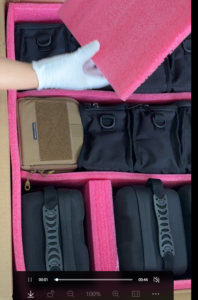
The packing photographs show individual soft pouches and hard protective cases. These different forms of protection help separate the main equipment from mounting parts and smaller accessories.
Individual protection makes digital night vision shipping more organized and reduces unnecessary contact between devices and metal accessories.
This separation is useful because mounting components may contact the device housing or optical surfaces if everything is packed together without organization. Smaller accessories can also become difficult to locate when a buyer opens a multi-unit shipment.
Individual pouches and cases provide several practical benefits:
- Each device or accessory group remains organized.
- Metal components are less likely to contact optical surfaces.
- The contents can be counted more easily.
- Dealers can inspect each package separately.
- Products can be repacked after demonstration or testing.
- Accessories are less likely to move freely inside the outer carton.
The exact arrangement can vary depending on the ordered configuration and quantity, but the basic principle remains the same: each important component should have a defined position and suitable protection.
Step 3: Digital Night Vision Shipping for Multi-Unit Orders
A multi-unit order requires a different packing method from a single retail package.
In the real packing process shown here, protective cases and accessory pouches are placed inside a larger shipping carton. Foam dividers create separate areas for different items.
For multi-unit digital night vision shipping, a structured internal layout helps prevent the cases and pouches from moving across the carton during transportation. It also makes better use of the available space without allowing all components to press against one another.
A separated internal layout helps with:
- Organizing individual products
- Distributing weight inside the carton
- Reducing direct contact between packages
- Making the contents easier to verify
- Keeping different accessories separated
- Simplifying unpacking at the destination
A well-organized carton is particularly valuable for dealers, distributors and project buyers. When the shipment arrives, the buyer can identify and inspect the contents without first sorting through loosely packed devices and accessories.
Step 4: Foam Dividers and Top-Layer Protection
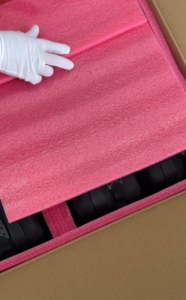
The open-carton photographs show pink foam used around and between the packed items.
For digital night vision shipping, foam dividers help limit movement and maintain separation between individual packages. Side sections and internal dividers help restrict horizontal movement, while the top layer fills the remaining space before the carton is closed.
Without suitable internal cushioning, even individually protected products may move inside the outer box. Repeated movement can cause packages to rub against each other or place uneven pressure on the contents.
The foam arrangement helps create:
- Separation between individual cases
- Cushioning around the sides of the carton
- Reduced empty space above the products
- Additional protection between different packing layers
- A more stable internal structure
The top foam sheet is placed over the packed items before the carton is closed. This creates an additional protective layer between the products and the upper surface of the shipping box.
This does not mean that packaging can eliminate every transportation risk. It means the shipment is prepared to reduce avoidable movement and provide a more structured protective system.
Step 5: Closing and Sealing the Shipping Carton
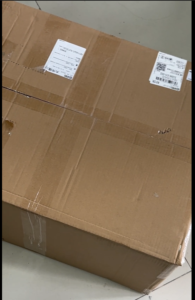
The final stage of digital night vision shipping is to close the outer carton, reinforce it with packing tape and verify the external shipping information.
After the internal arrangement is completed, the carton must remain securely closed during handling and transportation. Packing tape is applied across the main opening and reinforced where necessary.
Before dispatch, the external information should also be checked. Depending on the order and shipping method, this may include:
- Shipping label
- Destination information
- Package quantity
- Weight and dimensions
- Order or carton identification
- Required handling labels
- Logistics documentation
Any photograph published online should protect customer privacy. Names, addresses, telephone numbers, tracking numbers and other identifying information should be blurred or covered before the image is used on a website or social media platform.
The final sealed-carton photograph completes the visible packing process: the products have been organized, individually protected, separated by foam and enclosed inside the outer shipping carton.
What Should B2B Buyers Confirm Before Digital Night Vision Shipping?
Packing quality is important, but buyers should also confirm the commercial and logistical details before shipment.
Before arranging digital night vision shipping, the buyer and supplier should verify the model, configuration, quantity, destination and battery arrangement.
Exact Product Model
Confirm whether the order is for the UVQ G14 or another model. Product names and quantities should match the quotation, invoice and packing information.
Product Configuration
Confirm whether each unit is supplied as a Standard Version, Full Kit, monocular setup or dual-eye configuration.
Included Accessories
The buyer should know whether mounting rails, flip-up mounts, bridges, batteries, cables, documentation and other accessories are included.
Quantity
The total number of devices, cases and accessory packages should be checked before the carton is sealed.
Destination Information
The consignee name, delivery address, telephone number, postal code and destination country must be accurate.
Shipping Method
Air courier, air freight and other shipping methods may have different requirements for cost, delivery time, carton dimensions and documents.
Battery Arrangement
Orders containing rechargeable lithium batteries may require specific packing, labeling or transportation arrangements. The final method depends on the carrier, destination and shipment configuration.
Delivery Schedule
Buyers should confirm the expected dispatch time and estimated transportation period. International delivery times may be affected by the destination, customs procedures and logistics conditions.
Why Real Packing Photographs Matter
Many suppliers use general statements such as “secure packaging” or “safe international shipping.” These statements are difficult for buyers to evaluate without supporting evidence.
Real photographs make the digital night vision shipping process easier for international buyers to understand. They allow buyers to see:
- The actual products prepared for packing
- The different configurations in the batch
- The use of individual pouches and protective cases
- The arrangement inside the outer carton
- The foam separation between packages
- The final sealing stage
These images do not replace functional inspection or shipping documentation, but they provide visible evidence of how an order is handled before dispatch.
For new dealers and international buyers, this evidence can reduce uncertainty. It also gives the buyer a clearer basis for discussing special packaging, accessory combinations or order-specific requirements before production and shipment.
Packing Requirements Can Vary by Order
Not every order uses exactly the same internal arrangement.
The final digital night vision shipping method may depend on:
- Product model
- Standard or Full Kit configuration
- Monocular or dual-eye setup
- Number of units
- Included accessories
- Individual retail packaging requirements
- OEM or private-label packaging
- Destination country
- Selected shipping method
For example, a single sample order may use a smaller outer carton, while a dealer order containing multiple devices and mounting components may require additional separation and protective layers.
OEM and ODM buyers may also request customized product boxes, manuals, labels or accessory combinations. These requirements should be confirmed before packing begins.
Packing Photographs Do Not Replace Functional Testing
The photographs in this article document the physical packing process. They show product arrangement, configuration checking, individual protection, foam separation and final carton sealing.
They should not be interpreted as proof of optical testing, imaging performance or functional inspection.
Functional testing and quality-control procedures are separate stages. A supplier should clearly distinguish between:
- Product testing
- Configuration checking
- Accessory verification
- Physical packing
- Logistics preparation
This distinction matters because real evidence should be described accurately. Packing photographs prove how products were organized and protected; they do not prove technical performance by themselves.
From Product Confirmation to Final Delivery
Reliable B2B delivery is not based on one step. It connects order confirmation, configuration checking, accessory organization, protective packing, document preparation and logistics coordination.
The process shown in these photographs follows several practical principles:
- Arrange and identify the products before packing.
- Confirm the required configurations and accessories.
- Protect devices and accessory groups individually.
- Use internal dividers to organize a multi-unit shipment.
- Add foam protection to reduce movement.
- Seal the carton and verify the external shipping information.
For international buyers, these steps make the order easier to inspect and help reduce misunderstandings about configurations and included accessories.
Final Thoughts
A reliable digital night vision shipping process protects both the physical equipment and the accuracy of the order.
The photographs in this article show a real UVQ packing process involving multiple UVQ
 English
  Chinese
  Spanish