This page is intended for OEM, private-label and system-integration programs based on the UVQ T20 platform. For the standard T20 product overview and specifications, view the UVQ T20 Digital Fusion Night Vision Monocular.
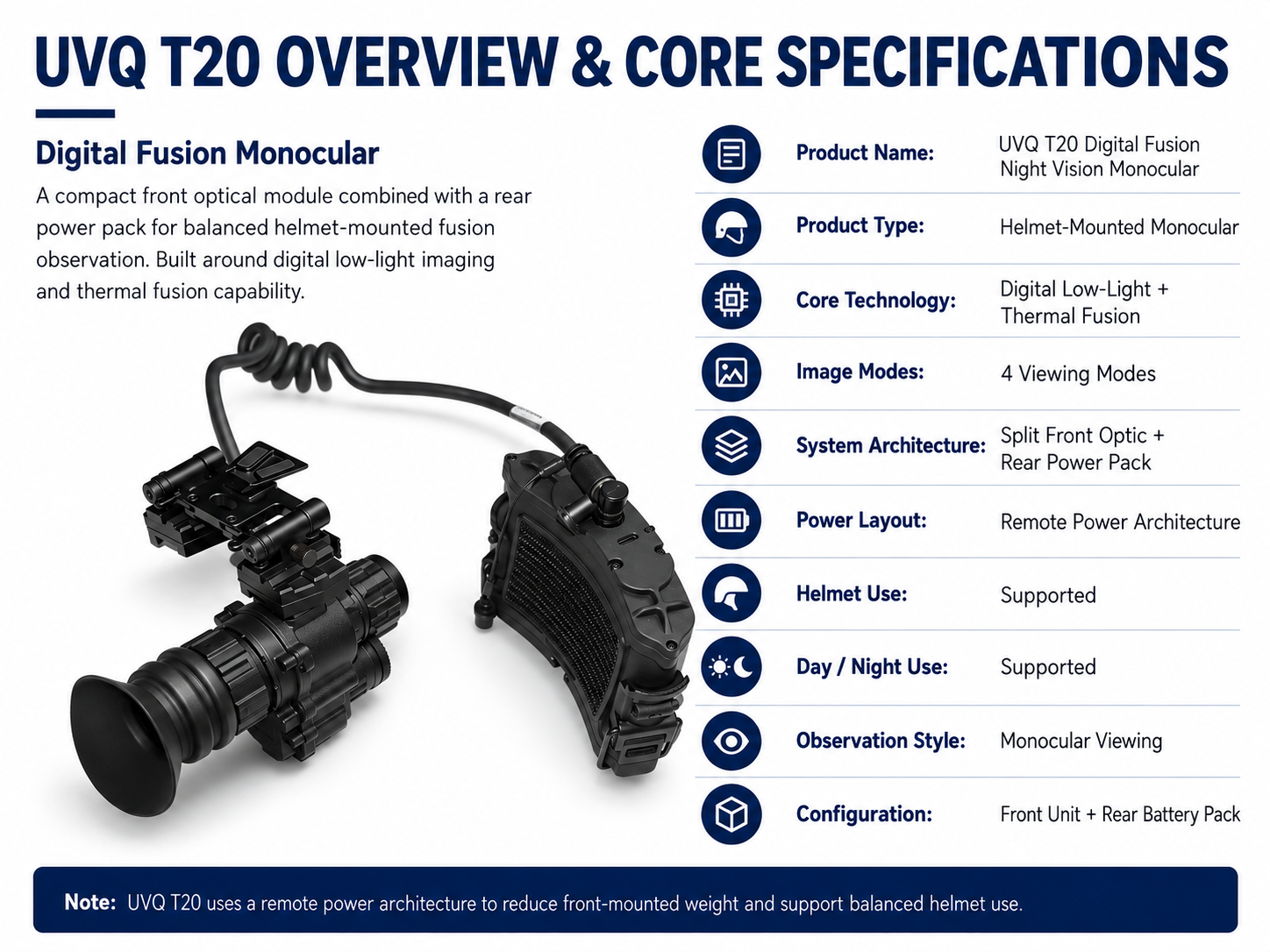
The UVQ T20 is a modular thermal fusion OEM system designed for distributors, brand owners, system integrators, and B2B buyers looking for a wearable platform that combines digital low-light imaging with thermal imaging.
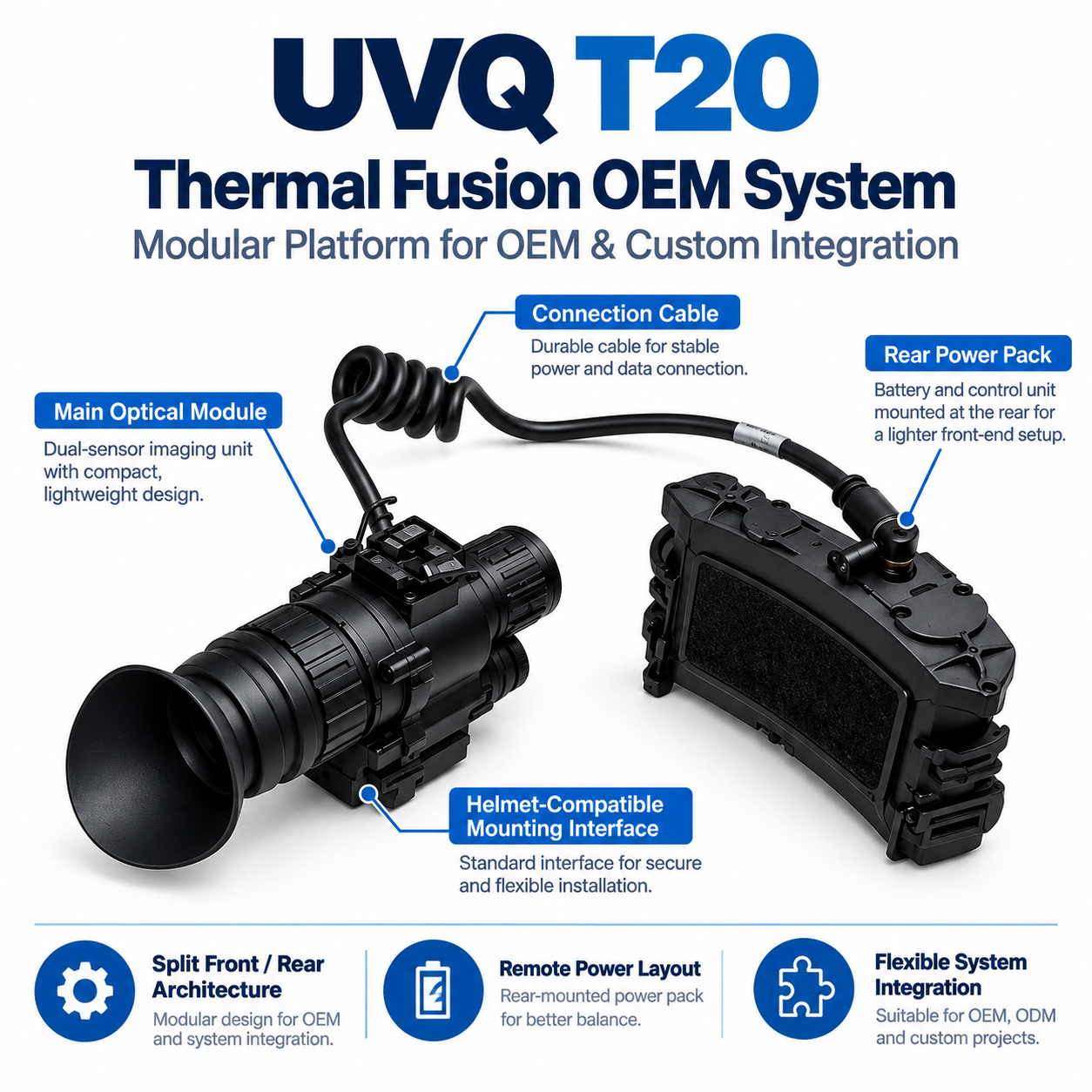
Unlike a single self-contained monocular, the T20 uses a separated front optical module and rear power pack connected through a dedicated cable. This modular architecture provides a clear basis for product evaluation, system integration, branding, and customized project discussions.
Thermal Fusion OEM System Architecture
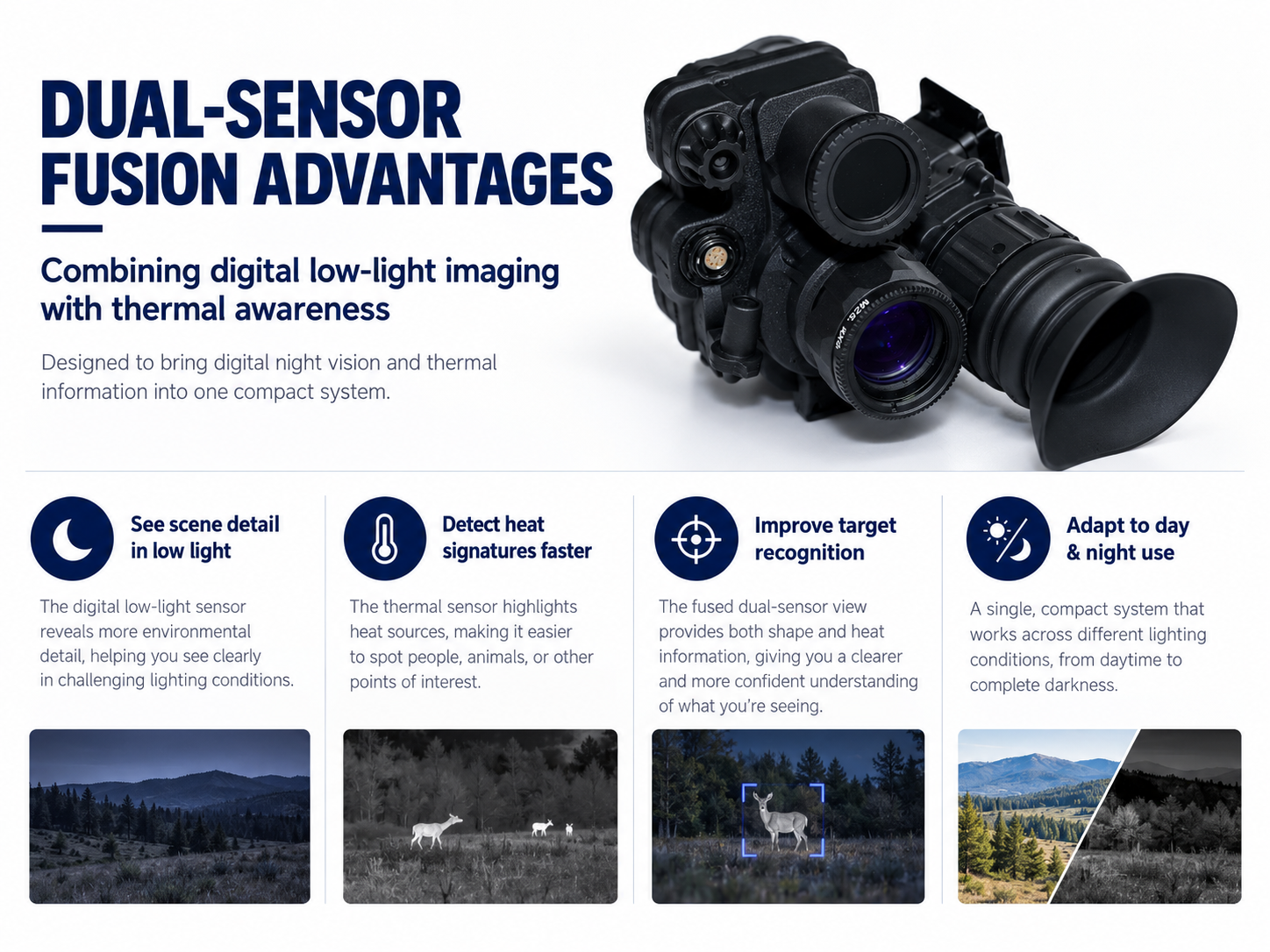
The T20 combines two complementary imaging channels in one wearable platform:
- Digital low-light imaging
- Thermal imaging
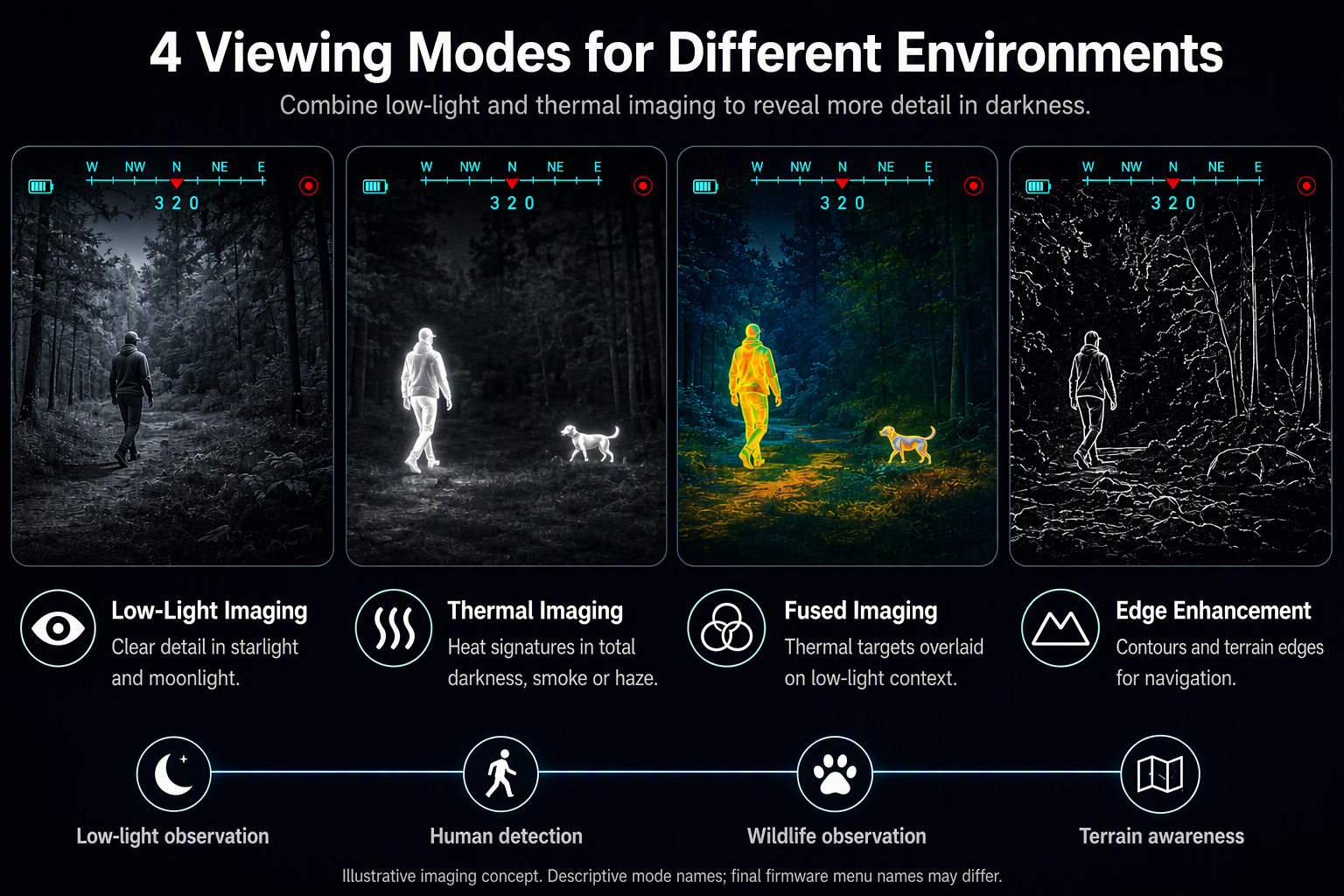
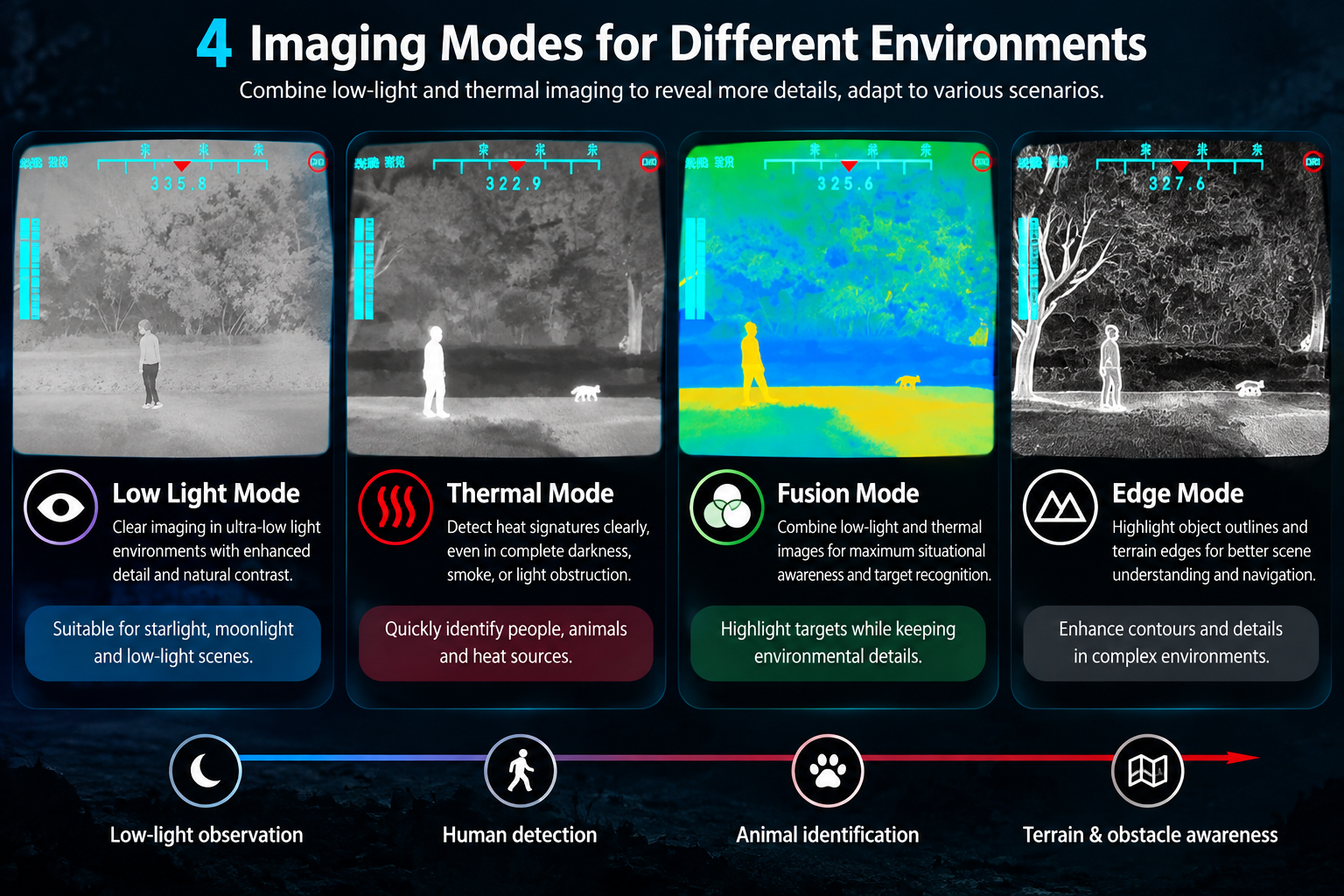
The system supports multiple observation modes, including low-light, thermal, fused, and enhanced viewing.
For OEM and integration projects, the key advantage is not only the imaging capability itself, but also the clearly separated system architecture.
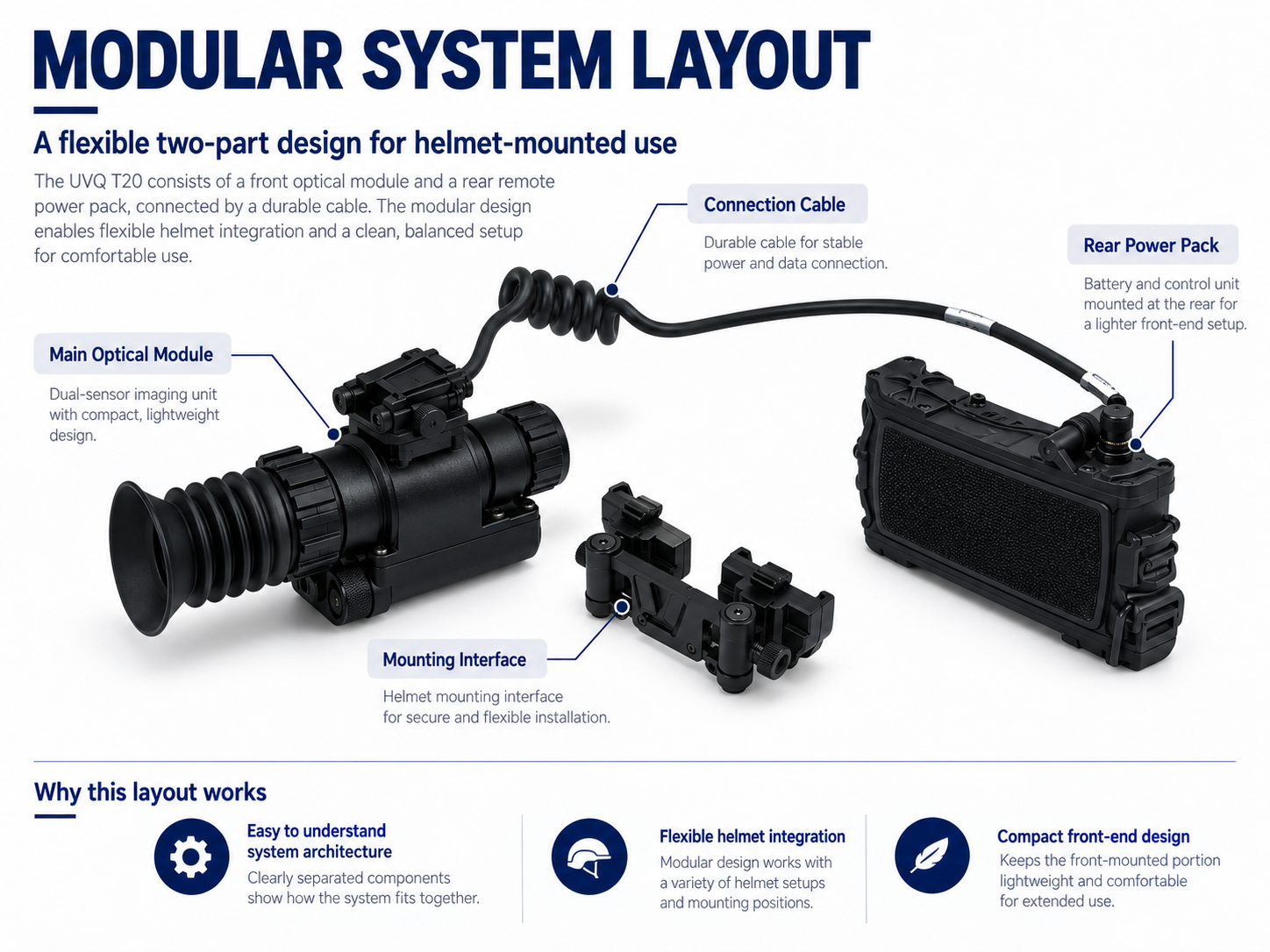
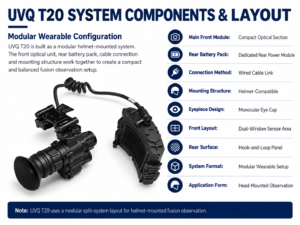
The main functional sections include:
- Front optical module
- Dual-sensor imaging section
- Helmet mounting interface
- Connection cable
- Rear battery power module
- Physical controls and external interfaces
This modular structure makes the T20 easier to evaluate as a complete system rather than only as a finished consumer product.
Modular Front and Rear Design
The T20 uses a split front-and-rear layout.
The front module contains the main imaging and observation components, while the rear module provides dedicated power support.
This configuration allows the optical module, mounting system, cable, and power pack to be treated as distinct system components.
For integrators and brand partners, this makes the physical architecture easier to understand, document, configure, and discuss during project development.
Main Optical Module
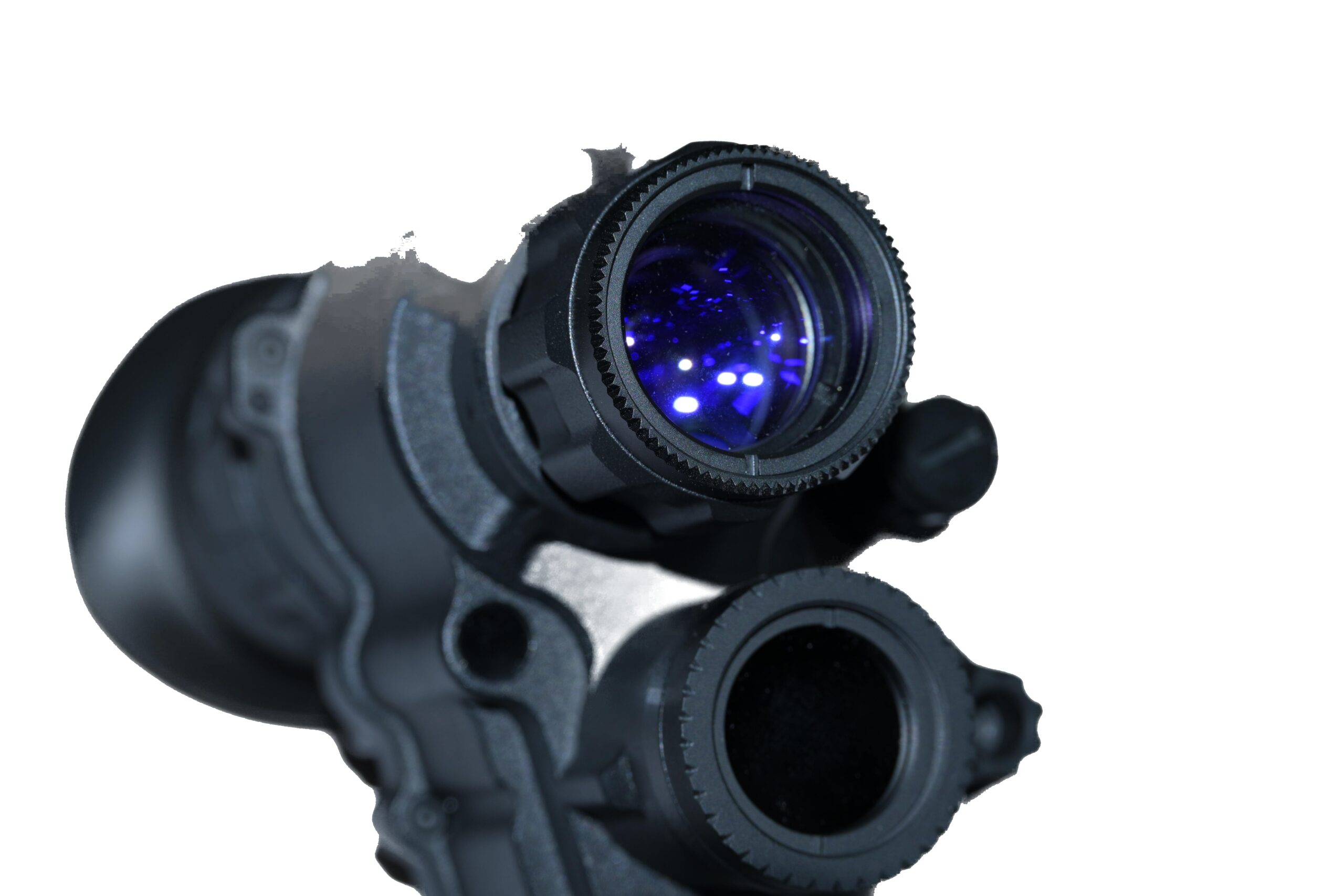
The front optical module contains the primary observation components of the T20.
Visible hardware includes:
- Digital low-light optical channel
- Thermal imaging channel
- Adjustable eyepiece
- Top controls and encoder
- External connector
- Helmet mounting interface
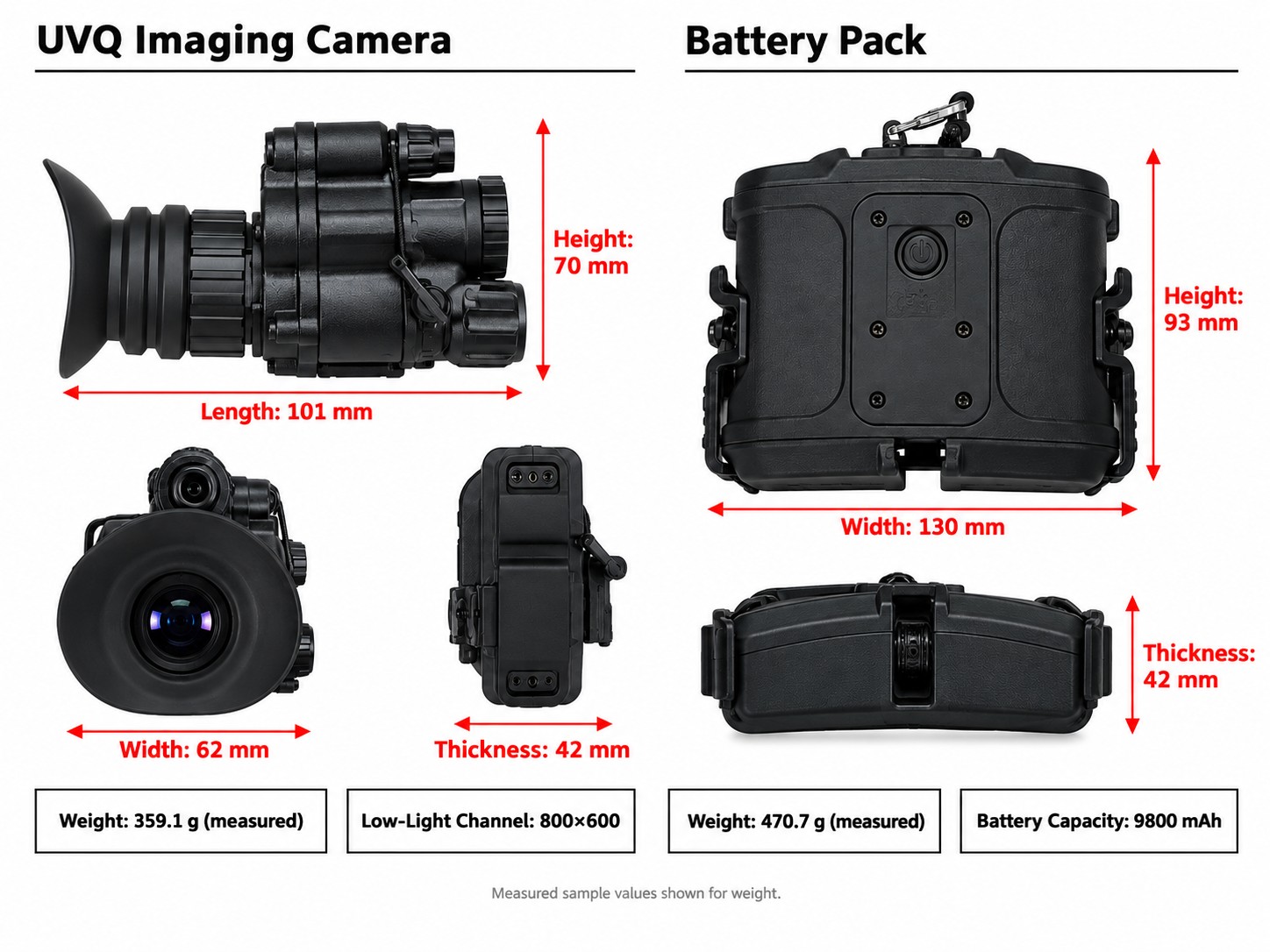
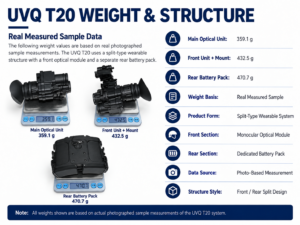
Measured sample weight:
359.1 g
Measured dimensions:
101 × 62 × 70 mm
Measured thickness:
42 mm
These values are based on photographed sample measurements.
Main Unit with Mount
The front unit combined with its mounting structure has a measured sample weight of:
432.5 g
This value provides a practical reference for system integrators evaluating helmet-mounted installation and front-side load.
Measured sample values may vary slightly between production units.
Platform Specifications
The UVQ T20 platform uses a digital low-light sensor of 1-inch CMOS with 18 μm pixel size, paired with a 640 × 512 thermal channel. Thermal sensitivity (NETD) is rated at 40 mK. The system provides four imaging modes: Fusion, Low-Light, Outline and Thermal.
Rear Battery Power Module
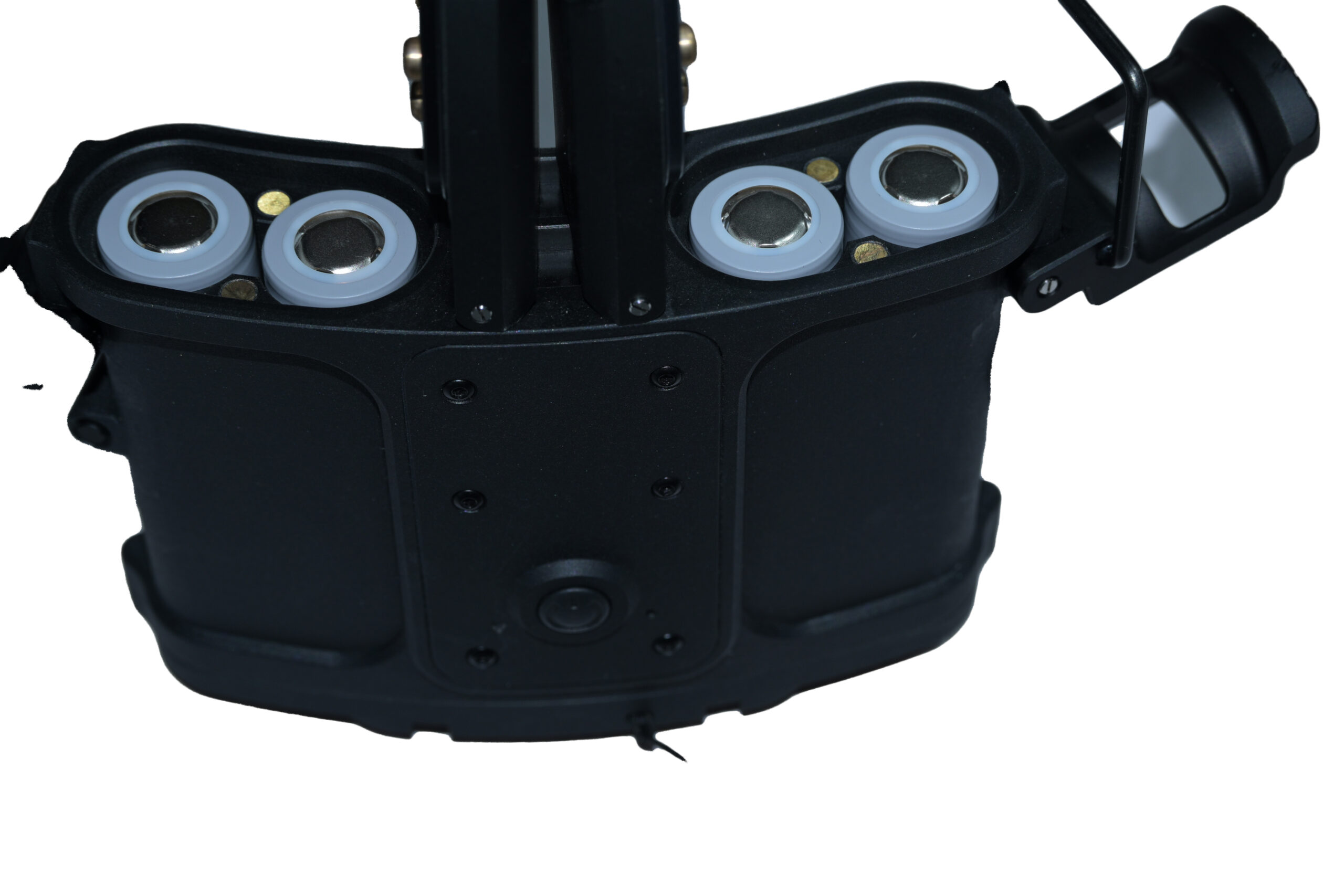
The dedicated rear battery pack is a core part of the T20 architecture.
470.7 g
Measured dimensions:
130 × 93 × 42 mm
The rear power module separates battery mass from the optical section and supports the power requirements of the dual-sensor imaging system.
Its position also contributes to a more balanced front-and-rear wearable configuration.
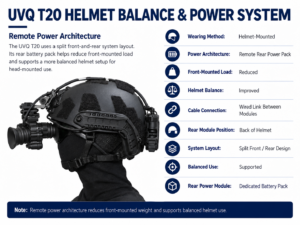
Remote Power Architecture
The T20 uses a remote power architecture rather than concentrating the battery system inside the front optical housing.
Remote power architecture reduces front-mounted weight and supports balanced helmet use.
From an integration perspective, this also creates a more clearly defined division between:
- Imaging module
- Mounting structure
- Power module
- Connection system
This separation can simplify evaluation of each component within a larger wearable platform.
Connection and Integration Structure
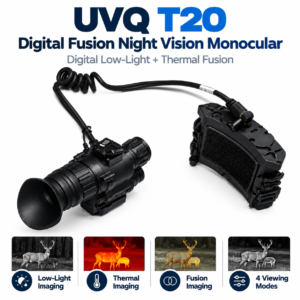
The front optical module and rear power pack are connected through a dedicated cable.
The physical system therefore consists of four main integration elements:
- Optical module
- Helmet mounting interface
- Connection cable
- Rear power pack
The modular structure gives OEM and integration partners a clear understanding of how the system is assembled and how the individual sections interact.
Dual-Sensor Imaging
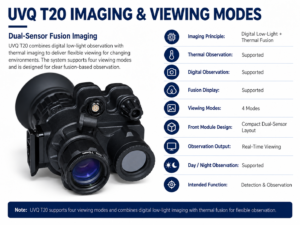
The T20 combines digital low-light observation with thermal imaging.
The low-light channel provides scene structure and visual context.
The thermal channel provides temperature-based contrast.
Fusion imaging combines information from both channels into one observation view.
Current imaging data used for the T20 platform includes:
Low-light channel: 800 × 600
Thermal channel: 640 × 512
Illustrative imaging graphics may be used on this page to explain the fusion principle. They should not be interpreted as actual through-device footage unless specifically identified as real device output.
Four Viewing Modes
The T20 supports four viewing modes:
- Low-light imaging
- Thermal imaging
- Fusion
- Outline
The availability of multiple modes allows the same platform to support different observation conditions and integration requirements.
Physical Product Details
The T20 optical module includes a number of externally accessible components that are relevant during product evaluation and integration.
These include:
- Diopter-adjustable eyepiece
- Optical adjustment components
- Top control area
- Encoder
- External connector
- Dual-sensor front layout
- Helmet mounting structure
Detailed product photography can be provided for technical evaluation and B2B project discussions.
System Components
A complete T20 configuration may include:
- Fusion night vision monocular
- Rear battery power system
- Connection cable
- Helmet mounting bracket
- Data connection accessories
- Protective carrying solution
- Battery and charging accessories
- Lens and eyepiece protection components
- Documentation
Exact package contents may vary according to project requirements and order configuration.
OEM and ODM Cooperation
UVQ supports B2B cooperation for qualified projects involving:
- Product distribution
- Wholesale supply
- OEM branding
- ODM discussions
- Packaging customization
- System integration
- Sample evaluation
- Project-based procurement
The exact scope of customization depends on quantity, technical requirements, project schedule, and the requested configuration.
UVQ does not present unsupported customization claims before technical feasibility is confirmed.
Branding and Packaging
For OEM or distributor projects, branding and packaging requirements can be discussed according to order quantity and project needs.
Possible project discussions may include:
- Brand presentation
- Product labeling
- Packaging design
- Manuals and documentation
- Product configuration
- Distributor packaging requirements
Final availability must be confirmed according to the specific project.
For Distributors and System Integrators
The T20 is suitable for buyers who need more than a single retail unit and want to evaluate a complete fusion imaging platform.
Typical B2B inquiries may include:
- Distributor evaluation
- Wholesale orders
- Brand-owner projects
- Product line expansion
- System integration
- OEM / ODM evaluation
For project discussions, provide:
- Target market
- Estimated quantity
- Intended application
- Branding requirements
- Packaging requirements
- Required system configuration
UVQ focuses on real product specifications, photographed sample measurements, and transparent technical communication throughout the evaluation process.
Frequently Asked Questions
How is the T20 powered?
The T20 uses a remote power architecture, with a separate front optical module and rear battery pack connected by a dedicated cable.
What are the resolutions of the T20?
Low-light channel: 800 × 600. Thermal channel: 640 × 512.
What is the weight of the T20?
Measured sample: approximately 359.1 g (front optical module) and 470.7 g (rear battery pack). Values may vary slightly between units.
Does the T20 support iOS?
No. Wi-Fi currently supports Android only.
What viewing modes does the T20 support?
Low-Light, Thermal, Fusion, and Outline.
Can I request a quote for the T20 OEM version?
Yes. The OEM version is available on a price-on-request basis.
 English
 Chinese
Reviews
There are no reviews yet.